The Danger of Seeing What Others Don't – Carl Jung
The Awakening Years
0:00 / 0:00
The Danger of Seeing What Others Don't – Carl Jung
157 просмотров · 4 дня назад
The Awakening Years
32 подписчика
157 просмотров · 4 дня назад
The Danger of Seeing What Others Don't – Carl Jung
You saw the groom's face change at the wedding. You heard the tiredness under a friend's cheerful voice. You knew who was lying before anyone said a word. And for most of your life, seeing it has cost you something: you were called too sensitive, too negative, the difficult one.
Carl Jung knew this cost from the inside. Looking back over his whole life, he wrote, "As a child I felt myself to be alone, and I am still, because I know things and must hint at things which others apparently know nothing of, and for the most part do not want to know." This video walks through the five dangers of seeing what others don't, in the order most people meet them, and then what this gift becomes in the later years, when it is finally used with love.
In this video:
• Why the gift of seeing what others miss can't be switched off, and why it leaves you so tired
• What happens when you say it out loud and nobody believes you
• The loneliness of a room full of people who love you
• Why the one who sees so often gets blamed, and what Jung said about projection
• The danger almost nobody notices: seeing everyone except yourself
• What your gift becomes in the later years
💬 If you've spent your life seeing what others miss, comment 444: I trust what I see.
Subscribe for more on Carl Jung, the second half of life, and the quiet awakening that comes with it.
#CarlJung #Jung #Intuition #HighlySensitive #ShadowWork #Projection #SecondHalfOfLife #SpiritualAwakening #InnerWork #Awakening
Chapters:
0:00 Don't skip
2:48 The gift you can't switch off
8:10 When nobody believes you
12:52 Lonely in a room full of people
17:16 Why the one who sees gets blamed
22:16 The danger nobody notices
28:28 What your gift becomes later in life
—
Sources:
Carl Jung — Memories, Dreams, Reflections (1962), "Retrospect"
Carl Jung — The Archetypes and the Collective Unconscious, Collected Works vol. 9i (¶504)
Carl Jung — Psychological Types (1921; tr. H. G. Baynes, 1923), "The Introverted Intuitive Type"
Carl Jung — Aion (1951), Collected Works vol. 9ii (¶14)
Images: public-domain paintings via Wikimedia Commons and the Art Institute of Chicago (Friedrich, Steen, Rembrandt, Van Gogh, Orchardson, Munch, La Tour, Whistler, Gauguin, Degas, Ribera, Anker, Chardin, Antonello da Messina, Redon, Besnard, Brouillet, Monet, Hammershøi, Renoir, Morisot, Vallotton, Millais, Daumier, Hodler, Toulouse-Lautrec, Delacroix, Turner, Steenwijck, Tournier, Corot, Jawlensky, Johansen, Valentin de Boulogne, Poussin, Collier, Ter Borch, Wright of Derby, Ter Brugghen, Vermeer, Manfredi, Millet, Ancher, Klimt, Simberg, Cézanne, Field, Bruegel, Ensor, Gérôme, Schiele, Honthorst, Manet, Caravaggio, Courbet, Rubens, Brouwer, Velázquez, Fildes, Modigliani, Homer and Pissarro), a 15th-century manuscript miniature, and Japanese woodblock prints by Katsushika Hokusai, Utagawa Hiroshige and Kawase Hasui (public domain).
Carl Jung photographs: public domain (c. 1910; c. 1935, ETH-Bibliothek Zürich); 1955 photographs by Comet Photo AG (Zürich) / ETH-Bibliothek Zürich, CC BY-SA 4.0 (https://creativecommons.org/licenses/.... The frames that adapt them are shared under the same licence.
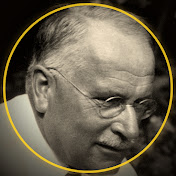
Thumbnail: adapted from a c. 1910 portrait of Carl Jung (public domain).
Music: Unfoldment, Revealment, Evolution, Exposition, Integration by Chris Zabriskie is licensed under a Creative Commons Attribution 4.0 license. https://creativecommons.org/licenses/...
Source: http://chriszabriskie.com/reappear/
Artist: http://chriszabriskie.com/
For reflection and education. Not a substitute for professional mental-health care.
