I Thought CEOs Were Useless": The Google Scientist Who Raised $100M for Voice AI | Neil | Gradium
Nectora by Julio Cordal
0:00 / 0:00
I Thought CEOs Were Useless": The Google Scientist Who Raised $100M for Voice AI | Neil | Gradium
294 просмотра · 13 дней назад
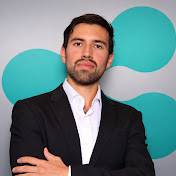
Nectora by Julio Cordal
87 подписчиков
294 просмотра · 13 дней назад
Neil Zeghidour went from AI researcher to Founder & CEO of Gradium, raising $100M to build the model layer for voice AI.
In this conversation recorded at HumanX Europe, Neil takes us through his journey from Facebook AI Research and Google Brain to Kyutai and Gradium — and explains how research around SoundStream and AudioLM helped reshape generative audio.
We discuss why small teams can outperform Big Tech in voice AI, how four people built Moshi in six months, Gradium's 50ms text-to-speech latency, the origins of modern audio language models, and why real-time translation could be a matter of months rather than years.
Neil also talks about making the transition from scientist to CEO after once believing that “CEOs were completely useless” — and how he now applies scientific experimentation to company building and go-to-market.
Highlights
00:00 — “CEOs were completely useless”
00:37 — What Gradium is building
01:28 — SoundStream and the origins of neural audio compression
03:22 — Applying the LLM approach to audio
03:47 — “In one week, we invented voice cloning”
04:32 — AudioLM and the early connection to Suno
04:56 — Leaving Google and moving toward real-time AI
05:57 — Moshi and full-duplex conversational AI
06:33 — Facebook AI Research → Google Brain → Kyutai
07:22 — Why Kyutai was created
07:44 — €300M in donations and 1,000 H100 GPUs
08:46 — Why Neil decided to start Gradium
10:26 — Raising $100M and becoming CEO
11:25 — Why startups can beat Big Tech in voice AI
12:23 — Four researchers, six months, first in the world
13:22 — Gradium's strategy: becoming the voice AI model layer
13:52 — 50ms text-to-speech latency
14:01 — Real-time translation: months, not years
14:43 — The most important lesson Neil learned as a researcher
16:06 — Advice for scientists becoming founders
16:13 — Bringing scientific methodology into being a CEO
