Amy Beach: Dreaming, Op. 15, No. 3
Solungga Liu
0:00 / 0:00
Amy Beach: Dreaming, Op. 15, No. 3
244 просмотра · 6 дн. назад
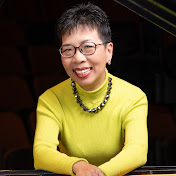
Solungga Liu
849 подписчиков
244 просмотра · 6 дн. назад
Amy Beach (1867-1944): Dreaming from Four Sketches, Op. 15 (1892)
Solungga Liu, piano
Watch the complete set:
1. • Amy Beach: In Autumn, Op. 15, No. 1
2. • Amy Beach: Phantoms, Op. 15, No. 2
3. • Amy Beach: Dreaming, Op. 15, No. 3
4. • Amy Beach: Fireflies, Op. 15, No. 4
“I have literally lived the life of two people, one a pianist, the other a writer,” wrote Amy Beach in 1930. She excelled in both roles. A member of the Second New England School of composers, Beach (1867¬–1944) earned her reputation as one of America’s foremost writers of music by virtue of her imaginative and finely crafted large-scale compositions, such as her “Gaelic” Symphony, Mass, and piano concerto, as well as her immensely popular songs, choral works, and piano pieces. Her standing as a pianist was equally prominent; critics praised the “exquisite technique” and “fine musical instinct” of her playing. In fact, her official debut as a pianist at Boston’s Music Hall at age sixteen, in 1883, took place the same year that her music was first published. Her music for piano, then, provides what she called a “connecting link” that unites the two facets of her artistic identity....
Beach’s Four Sketches, Op. 15 are smaller in scope, and each of the four pieces has roots in poetry. Epigraphs for “In Autumn” and “Fireflies” reference poems by the French poet Alphonse de Lamartine. In the former piece, Beach evokes the wind’s scattering of autumn’s fallen leaves through playful chromaticism and rhythmic bounce. The latter sketch, “Fireflies,” is even more active. A rapid, lilting stream of sixteenth notes harmonized in thirds illustrates the twinkling of winged insects that—while perhaps not as graceful as the butterflies alluded to in the epigraph—are no less magical. Beach herself performed both movements at the Chicago World’s Fair in 1893 during the Women’s Musical Congress, just one year after they were composed.
The two inner sketches, “Phantom” and “Dreaming,” use lines from Victor Hugo’s poetry as epigraphs. In “Phantom,” the playful music of the outer sections—characterized by wide melodic leaps and accented second beats—contrasts with a more lyrical inner section, creating colorful shifts that seem to capture the fragile transience of flowers referenced in the epigraph. Such stark contrasts are absent, however, from “Dreaming,” in which Beach creates a sustained atmosphere of hushed intimacy, as long melodic lines unfurl over slowly moving accompaniment....
~Ryan Ebright~
More about pianist Solungga Liu: https://www.solungga.com/
Provided to YouTube by NAXOS of America
℗ 2022 Centaur Records
Auto-generated by YouTube.
