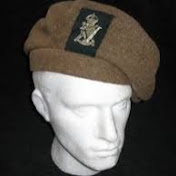
Lovat Scouts and Small History
Eire Military Collectibles
0:00 / 0:00
Lovat Scouts and Small History
1 267 просмотров · 3 г. назад
Eire Military Collectibles
2,35 тыс. подписчиков
1 267 просмотров · 3 г. назад
shanahanmilitaria1945@outlook.com
The regiment was formed in January 1900 for service in the Second Boer War by Simon Fraser, 14th Lord Lovat as the Lovat Scouts. Recruited initially from gamekeepers on Highland estates, the unit was commanded by the Hon. Andrew David Murray from his appointment by Lord Lovat in February 1900 until killed in action September 1901. After his death Lord Lovat, who had hitherto served as second-in-command of the regiment, took command himself (now aged 29), and remained in command till the end of the war.[6] Well practiced in the arts of marksmanship, fieldcraft and military tactics, they were also phenomenal woodsmen always ready to tempt fate, but also practitioners of discretion: "He who shoots and runs away, lives to shoot another day." Lovat Scouts have the distinction of being the first military unit to wear a Ghillie suit.
Lovat Scouts were attached to the Black Watch, but were disbanded in July 1901 while two companies (the 113th and 114th) were formed for the second contingent of the Imperial Yeomanry (IY) and another (178th) for the third contingent. After the end of the Second Boer War in June 1902, the companies returned to the United Kingdom on SS Tintagel Castle two months later, and were disbanded. The unit was reformed the following year, consisting of two regiments, titled the 1st and 2nd Lovat Scouts. From these Scouts a sharpshooter unit was formed and formally become the British Army's first sniper unit. The regiment was disbanded in August 1902 but reformed as Lovat's Scouts Imperial Yeomanry in March 1903. It reverted to the Lovat's Scouts Yeomanry when the yeomanry regiments transferred to the Territorial Force in April 1908. The regiment was based at Croyard Road near Beauly at this time (since demolished).
First World War
Highland Mounted Brigade
Inverness
Organisation on 4 August 1914
Assigned units
Fifeshire and Forfarshire Yeomanry, Kirkcaldy
A Squadron at Cupar
B Squadron at Dunfermline
C Squadron at Dundee
D Squadron at Forfar
1st Lovat Scouts, Beauly
A Squadron at Roybridge
B Squadron at Lochmaddy, North Uist
C Squadron at Skeabost, Skye
D Squadron at Beauly
2nd Lovat Scouts, Beauly
E Squadron at Kyle of Lochalsh
F Squadron at Dornoch
G Squadron at Alness
H Squadron at Inverness
Brigade troops
Inverness-shire RHA, InvernessAmmunition Column, NairnTransport and Supply Column, ASC,
InvernessField Ambulance, RAMC, Inverness
Source
Conrad, Mark (1996). "The British Army, 1914".
vte
In accordance with the Territorial and Reserve Forces Act 1907 (7 Edw. 7, c.9) which brought the Territorial Force into being, the TF was intended to be a home defence force for service during wartime and members could not be compelled to serve outside the country. However, on the outbreak of war on 4 August 1914, many members volunteered for Imperial Service. Therefore, TF units were split in August and September 1914 into 1st Line (liable for overseas service) and 2nd Line (home service for those unable or unwilling to serve overseas) units. Later, a 3rd Line was formed to act as a reserve, providing trained replacements for the 1st and 2nd Line regiments.
