Foscarini ⎮ Sinfonia II e Corrente ⎮ Massimo Lonardi–Lorenzo Micheli (Archlute & Baroque Guitar)
Lorenzo Micheli & SoloDuo
0:00 / 0:00
Foscarini ⎮ Sinfonia II e Corrente ⎮ Massimo Lonardi–Lorenzo Micheli (Archlute & Baroque Guitar)
3 454 просмотра · 4 месяца назад
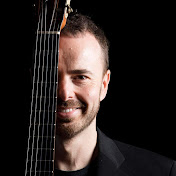
Lorenzo Micheli & SoloDuo
9,8 тыс. подписчиков
3 454 просмотра · 4 месяца назад
Giovanni Paolo Foscarini (ca.1600-ca.1647)
Sinfonia seconda ⎮ Corrente con la sua variatione
0:00 Sinfonia seconda a due
3:12 Corrente con la sua variatione
from “Li cinque libri della chitarra alla spagnola” (Roma, 1640)
Recording: Chiesa di S. Torpete, Genova, Italy ⎮ January 5, 2026
Audio and video recording: Enrico Tripodi
Massimo Lonardi plays an Archlute by Stefano Solari (Milan, 1990), after Matteo Sellas
Lorenzo Micheli plays a Baroque Guitar by Stephen Murphy (Mollans sur Ouvèze, 2015), after Antonio Stradivari
Giovanni Paolo Foscarini was an Italian guitarist, lutenist, and theorbo player, active in Ancona, Rome, Venice, Brussels, and Paris. A member of the Accademia dei Caliginosi in Ancona, he signed his earlier publications under the academic pseudonym Il Furioso.
"Li cinque libri della chitarra alla spagnola" represents the culmination of his publishing activity. The first three books appeared in 1630, a fourth was added around 1632, and all five were finally gathered together and published in 1640. The final version, dedicated to the French nobleman Charles of Lorraine, Duke of Guise, is signed by Foscarini and dated Rome, 15th September 1640.
The collection reflects a clear evolution in style and notation, presenting both pieces entirely in the strummed alfabeto style, and music in the so-called "mixed" style, combining strummed chords with lute-style counterpoint, alongside a number of pieces written entirely in the plucked manner.
Foscarini was among the first baroque guitar composers — along with Bartolotti and Pellegrini — to incorporate the plucked lute technique into guitar writing, rather than relying exclusively on strumming. This stylistic innovation proved highly influential: composers such as Angelo Michele Bartolotti and Francesco Corbetta later adopted the mixed style in much of their own guitar output.
