Sustainable Human Development: Challenges and Prospects in the Uncertain World
India and World Politics
0:00 / 0:00
Sustainable Human Development: Challenges and Prospects in the Uncertain World
52 просмотра · 2 нед. назад
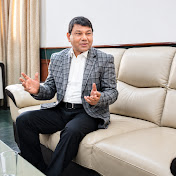
India and World Politics
443 подписчика
52 просмотра · 2 нед. назад
Sustainable Human Development: Challenges and Prospects in the Uncertain World
YouTube Handle: / @keshab2022
Dr. Keshab Chandra Mandal,
Sustainable Development,
Challenges and Prospects,
Keynote Address,
GLOBALCON SUMMIT II,
Rome, Italy | September 26, 2026,
Keynote Address
SUSTAINABLE HUMAN DEVELOPMENT: CHALLENGES AND PROSPECTS IN THE UNCERTAIN WORLD
Dr. Keshab Chandra Mandal, M.A.(Triple), Ph. D., B.ED.
Independent Researcher and Veteran Author, India
Opening Ceremony, GLOBALCON SUMMIT II
Rome, Italy | September 26, 2026, 4.00 P.M. Turkiye Time
________________________________________
Respected Dr. Nadire Kantarcioglu, President of the International Association for Scientific Research and Strategy Development—UBSDER, distinguished organizers of GLOBALCON SUMMIT II, eminent scholars, researchers and participants from Azerbaijan, India, Italy, Nigeria, Pakistan, the Philippines, Türkiye, and other parts of the world, ladies and gentlemen:
Good afternoon to all of you.
It is a great privilege for me to address this distinguished international gathering at the opening ceremony of GLOBALCON SUMMIT II. At the outset, I express my sincere gratitude to Dr. Nadire Kantarcioglu and the International Association for Scientific Research and Strategy Development for inviting me to deliver the keynote speech.
My topic today is “Sustainable Human Development: Challenges and Prospects in the Uncertain World.”
I have deliberately used the expression “uncertain world.” Because, we live in an age of extraordinary achievement, but also extraordinary contradiction. Humanity possesses scientific knowledge that earlier generations could scarcely have imagined. We can communicate across continents instantaneously. We can explore outer space, manipulate enormous quantities of data, develop artificial intelligence or Superintelligence, treat diseases once considered incurable, and create wealth on a scale unprecedented in human history.
Yet millions of people continue to struggle for the elementary necessities of a dignified life. Children still suffer from malnutrition and inadequate education. Women in many societies continue to experience social, political, and economic discrimination and violence. Inequality between and within the countries remains enormous. Armed conflicts destroy homes, hospitals, bridges, schools and livelihoods. Climate change threatens communities and ecosystems. Technological advancement creates opportunities, but simultaneously raises questions about employment, privacy, inequality and human autonomy.
This contradiction provides the starting point of my argument today.
If development is advancing so rapidly, why does human insecurity remain so widespread?
And an even more fundamental question follows:
What exactly do we mean by development?
From Economic Development to Human Development
For a considerable period, development was understood primarily through economic indicators. Economic growth, industrialization, technological progress, national income and per-capita income occupied the centre of development thinking. But Professor Amartya Sen framed "development as the realization of freedom and the abolishment of 'unfreedoms' such as poverty, famine and lack of political rights" (Source: Siri Tarjesen, Amartya Sen's Development as Freedom, January, 2004, Florida Atlantic University, https://www. researchgate.net/publication/27466009_Amartya_Sen's_Development_as_Freedom accessed on 23.09.2026).
But growth is a means. It cannot be the ultimate end of development.
A country may become richer while substantial sections of its population remain deprived. National income may increase while inequality increases. Cities may become technologically sophisticated while villages lack essential services. Universities may produce more graduates while young people struggle to find meaningful employment.
This realization contributed to one of the most significant intellectual transformations in development thinking.
The first UNDP Human Development Report, published in 1990, placed people rather than commodities at the centre of development. Human development came to be understood as the enlargement of people's choices—the opportunity to live long and healthy lives, acquire knowledge, achieve a decent standard of living, and exercise wider freedoms and opportunities. The approach was pioneered by Mahbub ul Haq and drew importantly on Amartya Sen's capability approach.
And durable peace, in turn, requires development.
Thank you, Dr. Nadire Kantarcioglu, for giving me this opportunity.
Thank you to the organizers of GLOBALCON SUMMIT II.
And thank you, distinguished colleagues and friends from across the world, for your kind attention.
Thank you,
Like, Share, Comment, and Subscribe:
YouTube URL: / drkeshabmandalindianauthor2014
YouTube Handle: / @keshab2022
LinkedIn: / dr-keshab-mandal-m-a-triple-ph-d-b-ed-pgdb...
