Everything You Own Is Charging You Rent. Diogenes Stopped Paying.
Rich Mindset
0:00 / 0:00
Everything You Own Is Charging You Rent. Diogenes Stopped Paying.
5 просмотров · 2 нед. назад
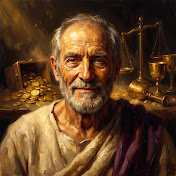
Rich Mindset
5 просмотров · 2 нед. назад
Diogenes of Sinope owned a cloak, a wallet, a staff and a cup. Then he watched a
child drink water out of his cupped hands, and he threw the cup away.
Diogenes Laertius gives us his exact words: "A child has beaten me in plainness of
living." A few pages later he does it again — a boy whose plate had broken was
eating lentils out of a hollowed crust of bread, so the bowl went too.
This is usually filed under poverty. It isn't about poverty. It's about a running
cost. Every object has a price, which you pay once, and a running cost — attention,
storage, cleaning, worry, the small administrative tax of ownership — which you pay
for as long as you own it. And that bill arrives whether or not you use the thing.
Which sounds like a metaphor, until you find that somebody measured it. Between 2001
and 2005 anthropologists at UCLA catalogued the interiors of 32 ordinary Los Angeles
homes. The average refrigerator door held 52 objects. Cars had been pushed out of
75% of the garages.
And when you try to get rid of any of it, a 1990 experiment explains exactly what
happens next.
▶ IN THIS VIDEO
· The oracle that told him to "deface the currency", the pun that made it the Cynic
motto, and the exile that started all this
· The mouse that gave him the idea, and why his home was a clay grain jar — not a
barrel, which is a mistranslation that makes him look like a vagrant
· What "cynic" actually meant, in his own words: "I fawn on those who give me
anything, I yelp at those who refuse, and I set my teeth in rascals"
· The UCLA study: 52 objects on the fridge, 166 on the worst one, and what the
saliva samples showed
· The endowment effect: sellers wanted $7.12 for a mug that people choosing freely
valued at $3.12 — the same decision, double the price
· Alexander the Great offers him anything he wants. He asks him to move.
· A one-shelf audit, a test you can run on any object, and a rule for before you buy
▶ CHAPTERS
0:00 The man who threw away his cup
1:21 I. The mouse
2:50 II. The running cost
4:05 III. Fifty-two things on the fridge
5:32 IV. Rent for things you don't use
6:46 V. Why you can't get rid of it
8:21 VI. Stand out of my light
9:28 VII. The one-shelf audit
10:01 Move 2: the chooser test
10:22 Move 3: say the running cost
