🌊 KAWA — 川 | Japanese Zen Music for River Flow and Constant Change
Samurai Zen Music
0:00 / 0:00
🌊 KAWA — 川 | Japanese Zen Music for River Flow and Constant Change
9 просмотров · 3 месяца назад
Samurai Zen Music
89 подписчиков
9 просмотров · 3 месяца назад
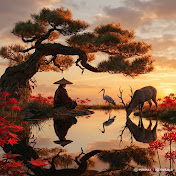
🌊 KAWA — 川 | Japanese Zen Music for River Flow and Constant Change
You cannot step into the same river twice. The river you step into the second time is already different water — and you are already a different person for having stepped in once.
Kawa (川) — river. Heraclitus said it in ancient Greece. Dogen said it in medieval Japan, more precisely and more gently: mountains flow and rivers are still. By which he meant something that requires a long sitting with to begin to understand — that what appears permanent is always in motion, and what appears in motion carries within it a constancy that no movement can disturb. The mountain moves, imperceptibly, in the geological time that contains human history the way a river contains a fallen leaf. The river is still — not because its water does not move, but because the river itself, as a form, as a presence, as the particular shape carved into this landscape by this water over this time — the river remains. The water passes. The river stays.
Kawa — the river. In Japan, rivers run steep and fast, hurrying from mountain to sea over distances that European rivers take hundreds of kilometers to cover in tens. The Japanese river is a mountain river in its character even when it reaches the coastal plain — quick, clear, cold from snowmelt, carrying with it the smell of the high country and the particular quality of water that has moved over granite and through cedar shadow before it arrives at the valley floor. These rivers have shaped the settlements that grew along their banks, determined the routes of the roads and the positions of the castles and the placement of the temple gardens where a borrowed view of water completes a composition the garden alone could not achieve. The river is not in the background of Japanese cultural life. It is one of the lines along which that life organized itself — for transport, for irrigation, for the seasonal festivals of Tanabata lanterns and O-Bon floating lights that return the dead to the water from which life came.
─────────────────────────────
✦ BEST FOR
─────────────────────────────
→ Embracing change and the flow of life
→ Meditation on impermanence — the river's teaching
→ Moving through transitions without grasping
→ Finding the pattern that persists within constant change
→ Riverside meditation and water-based practice
→ Study of Basho, Dogen, and the philosophy of flow
→ Creative work that requires surrender to the current
→ Anyone learning to move with life rather than against it
─────────────────────────────
✦ INSTRUMENTS & SOUNDS
─────────────────────────────
Shakuhachi (竹笛) — bamboo flute, cold and clear as mountain water
Koto (琴) — Japanese zither, flowing without resolving
Biwa (琵琶) — Japanese lute, the deep current beneath the surface
Water over stone — the oldest music, the first teacher
Rain joining the river, river joining the sea
The sound of form persisting through constant change
─────────────────────────────
✦ ABOUT KAWA (川)
─────────────────────────────
The character 川 is among the most ancient and most immediately legible pictographs in the Japanese writing system — three vertical strokes suggesting three streams converging, or the parallel currents of a flowing river seen from above, unchanged in its essential form across millennia of use. Rivers appear in the oldest layer of Japanese mythology: the Isuzu River that flows through the sacred precincts of Ise Jingu, in which pilgrims purify themselves before approaching the inner shrine, has been flowing in the same channel for longer than the shrine's recorded history. The Kamo River that runs through the center of Kyoto has been the backdrop of over a thousand years of the city's life — its banks the site of festivals and executions, of lovers' meetings and theatrical performances, of the great Gion Matsuri that has processed to its banks every July for over a millennium. The river does not know any of this history. It carries it — in the sediment of its banks, in the quality of light it reflects at different hours of different seasons, in the way the city has organized itself around the fact of its flow. Every city that has grown beside a river has grown beside a teacher. The river does not charge for the lesson. It only asks that you be still enough, and present enough, and willing enough to let what flows past you flow — without grasping, without mourning, with the open-handed attention of someone who has learned that the river gives most completely to those who need to hold it least.
─────────────────────────────
If this music helped you move with what is flowing rather than against it, share it with someone who is learning to release their grip on a current they cannot stop.
#Kawa #川 #ZenMusic #JapaneseMeditationMusic
