Laurin at Finals Young Driving Horse Championship with Marie Tischer in 2020
Classic German Horses
0:00 / 0:00
Laurin at Finals Young Driving Horse Championship with Marie Tischer in 2020
87 просмотров · 1 г. назад
Classic German Horses
2 подписчика
87 просмотров · 1 г. назад
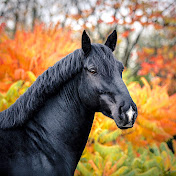
Laurin is a heavy warmblood. His fathers pedigree is based on original East-Friesian and Oldenburg stallions and the mothers pedigree Saxonian-Thuringian blood lines.
The breeding history of these type of horses is going back for more than 1000 years.
These nowadays so-called heavy warmbloods are the last descendants of the medieval elite steeds. The Destriers - the "Great Horse".
The most important modern sports horse stallions like Donnerhall or Nimmerdor are based on these medieval elite steeds. They could be found from 4th generation on. Stallions like Edler, Edelknabe, Freigraf, Gruson and lots of others.
Horses of this appearance adorn the Berlin Quadriga, Leonardo da Vinci and Albrecht Dürer created drawings and paintings of the "Great Horse," and famous knights such as Sir John Hawkwood are depicted with such horses.
But they are forgotten and almost extinct. These horses, which have served humans in close combat for centuries, don't deserve that.
The breeding history goes back more than 1,000 years. As early as the 5th century, horses were a cultural asset in Thuringia, coveted throughout Europe (see Museum for Prehistory Halle - Horses as cultural asset; • Kulturgut Pferd | Museum exklusiv ).
The Teutonic Order began breeding these warhorses in East Prussia in the 13th century as published by Fritz Rünger (Herkunft, Rassezugehörigkeit, Züchtung und Haltung der Ritterpferde des Deutschen Ordens.
Ein Beitrag zur Geschichte der ostpreußischen Pferdezucht und der deutschen Pferdezucht im Mittelalter. Zeitschrift für Tierzüchtung und Züchtungsbiologie einschließlich Tierernährung. - Berlin, 1925. - Bd. 2. - S. 211-308). This was based on stallions and mares from northern germanic tribes and from Thuringia. Rünger pointed out that warhorses had been exported to Spain from Thuringia already in the 8th century. At this time the The Spanish Christians had no cavalry to repel the Moors. The Moorish cavalry conquered all of Spain and crossed the Pyrenees. It was Charles Martel who recognized the powerlessness of the infantry. He first deployed the Frankish armored cavalry division from Germanic tribes with a long history of breeding warhorses at the Battle of Tours and Portiers. The Moors were defeated, and this marked the beginning of the reconquest of Spain with warhorses of Germanic breeding.
This breeding history was recently confirmed by the Exeter Warhorse Research Group. With a modern isotope method they observed that the medieval elite horses imported to UK in Tudor times had their origin in cold European regions and not from the Iberian peninsula or southern Europ (Pryor et al. Isotopic biographies reveal horse rearing and trading networks in medieval London. Sci Adv. 2024 Mar 22;10(12):eadj5782).
From all currently available sources there is a clear evidence that the breeds nowadays described as heavy warmbloods are the last descendants of these elite steeds. They need to be preserved and still in times of modern sporthorses they are perfect companions born to make people happy.
