Bach: Prelude and Fugue in E, BWV 878 (D. Jacques Way Harpsichord)
Craig Williams, Organist
0:00 / 0:00
Bach: Prelude and Fugue in E, BWV 878 (D. Jacques Way Harpsichord)
826 просмотров · 1 мес. назад
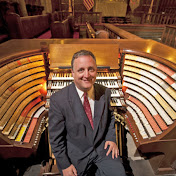
Craig Williams, Organist
3,21 тыс. подписчиков
826 просмотров · 1 мес. назад
Craig Williams plays the ninth prelude and fugue in Johann Sebastian Bach's Well-Tempered Clavier, Volume II. Volume II was composed and assembled 20 years after the first set, in 1742 while he was at Leipzig. With the later set is seen many more preludes which resemble dance or sonata movements, divided into two repeating sections. This prelude would fit in as one of the fast dance movements in one of Bach's suites or partitas, beginning with a single note in the left hand providing the impetus for the voices in the right hand to begin their running patterns. Like many of these types of movements, the first section modulates to the related key of B Major from the tonic E Major. A major arrival point in the first section is a sequence of alternating voices in the right hand set over pulsing octaves in the left creating a pedal point and then moving to some sequences with high notes playing in octaves above the middle registers which quickly cadence. The second section also begins with a single bass note followed by the right hand voices, though Bach quickly moves out of B Major changing the B to a B#, forming the dominant of the new key of c# minor. From there the patterns will settle eventually on the alternating octaves in the right hand before the pedalpoint octaves, presenting the ideas in reverse order than in the first section. The octaves move into a running scale line in the left hand which creates the momentum to create the final cadence, settling on the final chord which takes up an entire measure - with a dotted half note. The fugue then begins with slower rhythms, being in 4/2 time (alla breve) with the subject comprising a whole note followed by four half notes. The countersubject quickly introduces small two-note phrases with eighth-notes, reminding the listener that this a fugue (the word meaning "flight"), not a ricercar. As the quicker notes play against the more staid subject, Bach introduces the subject at times in diminution, matching the countersubject rhythms. In this way, a fugue which appears to have a marked contrast with the prelude ends up taking on its busy and energetic nature, providing symmetry and cohesion to the overall prelude and fugue.
#bach
#baroquemusic
#harpsichord
#welltemperedclavier
0:00 Prelude
5:22 Fugue
