David Popper Experience #19/40 „Lohengrin“ - Sebastian Diezig, cello
MrCellissimo
0:00 / 0:00
David Popper Experience #19/40 „Lohengrin“ - Sebastian Diezig, cello
521 просмотр · 1 месяц назад
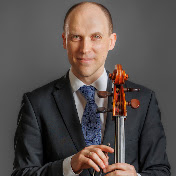
MrCellissimo
4,35 тыс. подписчиков
521 просмотр · 1 месяц назад
Sebastian Diezig, cello – http://www.SebastianDiezig.com
Popper No. 19 "Lohengrin"
This one is special because it has a nickname. The reason is that it is based on the opening measures of a difficult cello passage from Wagner's opera Lohengrin, hence the title „Lohengrin“.
It is a physically demanding etude, especially for the right hand, as it requires an enormous number of rapid string crossings, making it increasingly tiring to maintain a secure bow hold. String crossings are undoubtedly the defining feature of this etude: you are required to cross several strings at high speed a lot. At the same time, Popper has also included a number of awkward runs that present a challenge for the left hand.
I also find this etude difficult to perform from memory. I have noticed the same with several other Popper etudes of similar character: when so many notes move back and forth across the cello in rapid succession while constantly alternating between two or more strings, memorization becomes more challenging. I actually had to memorize certain passages consciously and invent a few mental cues to keep from losing my place. This is especially true in the second half of the etude, where, after music that is otherwise almost identical to the opening, Popper unexpectedly continues on a G natural instead of a G-flat and develops completely different material.
Nevertheless, playing these etudes from memory is a fundamental part of this long-term Popper project for me. Memorization is a skill that deserves to be trained just as much as technique. It certainly makes the entire process considerably longer, because with the score in front of me I could reach a satisfactory performance level much sooner.
As always, my best advice for a piece like this is to practise slowly. Of course, the goal is eventually to reach a brilliant, lively tempo, but without first establishing a fundamentally solid technique at a slower speed, the journey becomes much longer than it needs to be.
For this particular etude, I would also recommend isolating the most difficult passages and practising them extensively in a variety of rhythmic patterns. That is one of the most effective ways to break down and master really tricky sections like in this piece.
Finally, Popper marks the etude spiccato. I think that is absolutely appropriate, but every note should still be played with a full, resonant sound.
