Batterie Longues Sur Mer
The Grey Line - Silent history witnesses
0:00 / 0:00
Batterie Longues Sur Mer
653 просмотра · 5 дней назад
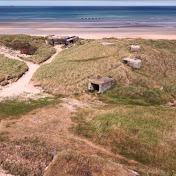
The Grey Line - Silent history witnesses
10 подписчиков
653 просмотра · 5 дней назад
6. Juni 1944, 5:37 Uhr. Der britische Kreuzer HMS Ajax nimmt die Batterie Longues-sur-Mer unter Feuer. Die Geschütze auf der Klippe antworten. Stundenlang.
184 Mann dienen hier, rund die Hälfte ist über 40 Jahre alt. Die Batterie gehört zur Kriegsmarine. Ab Ende 1943 untersteht sie als 4. Batterie der Heeres-Küsten-Artillerie-Abteilung 1260 dem Heer. Kommandant ist Oberleutnant Kurt Weil.
Auf der Baustelle arbeiten auch französische Résistance-Kämpfer. Sie melden den Alliierten den Aufbau der Anlage und schwächen den Beton einer Kasematte.
Vor der Landung fallen rund 1.500 Bomben auf die Batterie. In der Nacht zum 6. Juni folgen fast 600 Tonnen. Die Kasematten halten, doch die Kabel zum Leitstand reißen. Am D-Day verständigen sich die Männer nur noch mit Sichtzeichen.
Trotzdem zwingt die Batterie am Morgen das britische Führungsschiff HMS Bulolo, seinen Ankerplatz zu räumen. Die Kreuzer Ajax, Argonaut, Georges Leygues und Montcalm sowie das Schlachtschiff Arkansas schlagen zurück. Ein Geschütz nach dem anderen fällt aus. Das letzte feuert bis zum frühen Abend.
Am 7. Juni rückt die C-Kompanie des 2. Bataillons Devonshire Regiment von Gold Beach heran. Die übrigen rund 120 Mann ergeben sich fast kampflos.
In diesem Video gehen wir durch die Kasematten von Longues-sur-Mer. Hier stehen die Originalgeschütze bis heute an ihrem Platz.
VIDEO DESCRIPTION ENGLISH
6 June 1944, 5:37 a.m. The British cruiser HMS Ajax opens fire on the Longues-sur-Mer battery. The guns on the cliff fire back. For hours.
The Organisation Todt builds the position from September 1943 on the plateau above the cliffs between Omaha and Gold Beach. It is finished in April 1944. Four M272 casemates each protect a 15 cm Škoda naval gun with a range of around 20 km. 300 m further forward, right on the cliff edge, an M262A fire control post directs the guns. Film fans know it from "The Longest Day". Flak, machine gun posts, minefields and barbed wire secure the site.
184 men serve here, about half of them over 40. The battery belongs to the Kriegsmarine. From late 1943 it comes under Army command as the 4th Battery of Army Coastal Artillery Battalion 1260. Its commander is Oberleutnant Kurt Weil.
French Resistance fighters work on the construction site. They pass the layout to the Allies and weaken the concrete of one casemate.
Before the landings, around 1,500 bombs hit the battery. On the night before D-Day almost 600 tons follow. The casemates hold, but the cables to the fire control post are cut. On D-Day the crews can only communicate by visual signals.
Even so, that morning the battery forces the British command ship HMS Bulolo to leave its anchorage. The cruisers Ajax, Argonaut, Georges Leygues and Montcalm and the battleship Arkansas strike back. One gun after another falls silent. The last one keeps firing until early evening.
On 7 June, C Company of the 2nd Battalion, Devonshire Regiment advances from Gold Beach. The remaining 120 or so men surrender almost without a fight.
In this video we walk through the casemates of Longues-sur-Mer, where the original guns still stand today.
HINWEIS (DEUTSCH)
Dieses Video ist eine historische Dokumentation über die Anlagen des Atlantikwalls. Es dient der staatsbürgerlichen Aufklärung und der Berichterstattung über Vorgänge der Geschichte. Im Video sichtbare Kennzeichen verfassungswidriger Organisationen, insbesondere Hakenkreuze, zeigen wir ausschließlich zur Dokumentation. Wir distanzieren uns ausdrücklich vom Nationalsozialismus und jeder Form von Extremismus.
Rechtsgrundlage: § 86a StGB stellt das Verbreiten und öffentliche Verwenden solcher Kennzeichen unter Strafe. Nach § 86a Abs. 3 StGB gilt § 86 Abs. 4 StGB entsprechend. Dieser lautet: "Die Absätze 1 und 2 gelten nicht, wenn die Handlung der staatsbürgerlichen Aufklärung, der Abwehr verfassungswidriger Bestrebungen, der Kunst oder der Wissenschaft, der Forschung oder der Lehre, der Berichterstattung über Vorgänge des Zeitgeschehens oder der Geschichte oder ähnlichen Zwecken dient."
Kommentare mit verherrlichenden oder verfassungsfeindlichen Inhalten löschen wir.
NOTICE (ENGLISH)
This video is a historical documentary about the fortifications of the Atlantic Wall. It serves civic education and the reporting of historical events. Any symbols of unconstitutional organizations visible in the video, in particular swastikas, are shown solely for documentation. We explicitly distance ourselves from National Socialism and every form of extremism.
Legal basis: Section 86a of the German Criminal Code (StGB) prohibits the distribution and public use of such symbols. Under Section 86a (3), Section 86 (4) applies accordingly. It exempts acts that serve civic education, the defence against unconstitutional efforts, art, science, research, teaching, reporting on current or historical events, or similar purposes.
Comments that glorify National Socialism or contain unconstitutional content will be deleted.
