15 APPALACHIAN RAILROAD TOWNS THAT DIED WHEN THE TRACKS CAME UP — WHAT HAPPENED TO THEM?
Maisons Condamnées
0:00 / 0:00
15 APPALACHIAN RAILROAD TOWNS THAT DIED WHEN THE TRACKS CAME UP — WHAT HAPPENED TO THEM?
305 просмотров · 3 дня назад
Maisons Condamnées
6 подписчиков
305 просмотров · 3 дня назад
In the first two decades of the twentieth century, a strip of ground at the bottom of the New River Gorge in West Virginia — a cliff on one side, the river on the other, and no road into it at all — earned the Chesapeake and Ohio Railway more freight revenue than Richmond and Cincinnati put together. Fifteen passenger trains a day stopped there. Around four million tons of smokeless coal went out every year. Today about five people live in it.
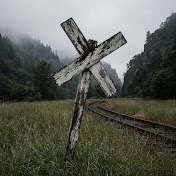
These fifteen towns were not abandoned. They were dismantled. Every one of them was built by a company that laid track into an empty hollow first and then unloaded a finished civilisation off flat cars — houses, a store, a school, a doctor, a jail — and when the seam played out or the timber ran short, the same kind of crew came back and took the railroad away. There was no second road, because nobody ever built one.
We count down from fifteen to one across six states: Pennsylvania, North Carolina, West Virginia, Ohio, Kentucky and Tennessee. A Pennsylvania lumber town of eight hundred people that lasted exactly as long as the trees did. A West Virginia settlement at three thousand eight hundred and fifty-three feet with no cemetery, which sent its dead down the mountain on the same line that brought the flour up. An Ohio town whose last family left in 1947 and whose tracks were not pulled up until 1988. A Kentucky camp where the crew building the railroad found a coal seam nobody had been looking for. A Kentucky mine town the National Park Service rebuilt as open steel frames, because there was nothing left to restore — a house with no walls, a church with no roof. A Tennessee logging railroad whose written purpose was to run a line into the watershed, finish the cutting and then remove the line: about a hundred and twenty-five miles of track went down, and not one foot of it survives. A North Carolina cove that went ninety-three years without a road of any kind, where the last family walked out in 1957.
Three times we stop the countdown and look at how the machine worked. How these places were installed rather than grown — one Pennsylvania town existed on paper before it existed on the ground, six streets sixty feet wide and two hundred and fifty identical houses. The number that puts it in scale: 465 coal company towns in West Virginia alone in 1930, nearly eight in ten miners in the state living in a company house, more than five hundred coal towns across the region — and zero company-owned towns there today. And what the train really was to a place like this: the mail, the payroll, the doctor, the schoolteacher, the bride and the coffin, all on one line.
Where the sources disagree — on which decade finished a town, on when the last mine actually closed — you get both versions rather than a tidy one.
Number one is the town this video opens with, and it still has a main street that is a working railroad, with a row of building fronts facing the track.
If you have walked one of these grades, put the name in the comments — that is how these lists get corrected.
