Venice's $100M Palazzos Are Sinking Into The Ocean — And Italy Can't Stop It
Toxic Asset
0:00 / 0:00
Venice's $100M Palazzos Are Sinking Into The Ocean — And Italy Can't Stop It
150 просмотров · 9 дней назад
Toxic Asset
164 подписчика
150 просмотров · 9 дней назад
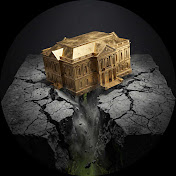
Venice's Grand Canal palazzi sell for tens of millions of euros — yet Italy's ~$6 billion MOSE flood barrier is designed to stay down while the sea floods their ground floors. This is how the fortune met the fine print.
Along the 2.4-mile Grand Canal, more than 170 historic palaces — Gothic and Renaissance palazzi like Palazzo Pisani Moretta (sold for a reported ~€36 million) and Ca' Dario (relisted with Christie's at ~€20 million) — sit on wooden piles and Istrian stone in a sinking lagoon beside a rising Adriatic Sea. After the catastrophic acqua alta of November 2019 — a 187 cm tide at Punta della Salute, the second-highest on record, with damage estimated near €1 billion — the MOSE barrier's 78 steel gates at the Lido, Malamocco, and Chioggia inlets finally rose in October 2020. But the gates only lift for tides forecast above 110 cm, when roughly 12% of Venice is already underwater. Every tide below that line — the ones that come again and again — belongs to the owners.
This is the story of why some of the most valuable buildings in Italy can't buy a dry ground floor, why St. Mark's Basilica paid €5.3 million for its own glass flood wall inside a $6 billion barrier, and who pays when public protection stops at the front door: the owner, the insurer, or the Italian taxpayer.
IN THIS EPISODE:
How the Venetian palazzo worked as warehouse, office, and status symbol — and why the water door made the Grand Canal's fortunes
The flaw in the foundations: wooden piles, the Istrian stone "collar," rising damp, and salt crystallization eating brick from the inside
Subsidence meets sea-level rise: Porto Marghera groundwater pumping, ~4.9 mm/yr sea-level rise, and a foot of water gained in 130 years
November 12, 2019: the second-worst flood in Venice's recorded history, St. Mark's Basilica flooded, and a state of emergency
The MOSE barrier's 110 cm trigger — and why it can't rise earlier (cost per closure, port traffic, lagoon oxygen)
Who knew: published design thresholds, scientists' warnings, and the 2014 MOSE corruption scandal that delayed it nearly a decade
The reckoning: Italy's flood-insurance gap (about 1 home in 20 covered), the 2019 relief payouts, and a historic center that fell below 50,000 residents
CHAPTERS:
00:00 The barrier that stays down
01:16 How the money got here
03:54 The flaw in the ground
06:39 When the damage became visible
09:18 The wall of no: MOSE's 110 cm trigger
12:42 Who knew, and when
14:18 The reckoning
17:23 What's left
SOURCES & METHOD:
This investigation draws on public reporting, Venice tide-gauge records (Punta della Salute), MOSE consortium and Venice Lagoon authority statements, published sea-level and subsidence studies, conservation research from Ca' Foscari University of Venice and IUAV University of Venice, Procuratoria di San Marco project records, Insurance Europe data, Italian government emergency and catastrophe-insurance measures, municipal population data, and documented property sales and listings. Verified facts are kept separate from reasonable inference throughout; disputed figures (such as MOSE's total cost) are given as ranges.
Educational and documentary content only, based on publicly available reporting, scientific studies, and official records. Not legal, financial, insurance, or real-estate advice.
Subscribe for a new investigation every week — the world's most expensive homes that became impossible to insure, impossible to sell, and impossible to save.
SUBSCRIBE: / @toxicasset
#Venice #MOSE #LuxuryRealEstate
