Stop Buying Firewood — The Logger's Stacking Method That Doubles Your Heat
Harlan Sawyer
0:00 / 0:00
Stop Buying Firewood — The Logger's Stacking Method That Doubles Your Heat
539 просмотров · 2 недели назад
Harlan Sawyer
100 подписчиков
539 просмотров · 2 недели назад
In October of 1952 a schoolteacher named Almeda, up Dry Fork, West Virginia, had
eleven dollars of good split oak in her yard and the coldest house on the creek. The
wood came in April. Her brother heaped it against the north wall and wrapped it tight
in a war surplus tarp, top, sides and all, and it sat there looking like thrift
itself for six months. By January there was ice in the water bucket, ten feet from a
full woodpile. Across the creek, a track layer had the same oak, from the same
seller, for the same eleven dollars. His house you could sit in with your coat off.
Two yards, one creek, the same wood. The difference was the stack.
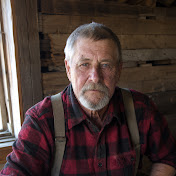
I'm Harlan Sawyer. Seventy-one years old, fifth generation on Sawyer Ridge in
Pocahontas County, West Virginia. I went in the woods at fourteen, in 1969, and came
out in 2011. My grandfather Enoch was a scaler, and near everything in this video
comes out of the tally book he carried in his coat from 1931 until the winter he
died. He could read a family's whole winter off their woodpile without slowing his
walk. This video teaches you to read your own.
Six pieces to a stack that finishes in one summer instead of two. Five cost you
nothing but an afternoon. The sixth is the wind row, the piece that does the real
work, and it fell out of the books about the time the word "seasoned" quit being a
fact and became an advertisement.
Two scrap boards and a strip of rusty tin. Against buying the word "seasoned" every
fall at full price, or eight dollar bundles at the gas station that work out to north
of a thousand dollars a cord.
CHAPTERS
00:00 Two men, the same load of oak
01:12 Almeda, Dry Fork, 1952
03:05 How we store wood now
03:30 What the record says
04:00 Reading a stack
04:30 The tally book
05:21 Who I am
06:14 The six pieces
07:09 One — split it first, smaller than you think
09:05 Spring maul beats fall maul
10:14 Two — get it off the dirt
12:18 "You grew a garden, boy"
13:37 Three — one row deep, out in the light
15:23 Where half your heat goes
17:23 The block-pile man and the wind-row man
18:09 Four — the mouse and the cat
21:23 Five — cover the top, never the sides
23:41 1974, and the word "seasoned"
24:28 Gas station arithmetic
25:37 Six — the wind row
27:23 The October proof
28:37 Back to Dry Fork
30:23 The whole thing, in order
31:04 Your turn
Tell me down below — what did your people call the woodpile? The rank, the rick, the
cordwood row? Who taught you to stack, and what was their one rule, the sentence they
said every time like scripture? And if your granddaddy had his own version of the
mouse and the cat, I want that saying word for word. I'm collecting them like
arrowheads. The story that gets the most replies down there is the one I go deep on
next.
SAFETY, PLAIN
I'm not your fire marshal. Keep woodpiles clear of the house wall — wood against
siding invites every bug in the county to move in with you. Give any stack over
shoulder height cross-tied ends or a post, because wood falls harder than it looks.
Burn at twenty percent moisture or below, get your chimney swept every year by
somebody who does it for a living, and if your stove came with instructions, follow
those too. This isn't either-or.
Stack it dry, friend. It keeps.
#firewood #firewoodstacking #seasonedfirewood #cordofwood #woodheat #woodstove
#homesteading #selfreliance #frugalliving #appalachia #oldways #offgrid
