DURIAN SOLO HUNTER - Tracking Durio pahangensis & Boschia griffithii ,October 2026
University Of Durian Malaysia
0:00 / 0:00
DURIAN SOLO HUNTER - Tracking Durio pahangensis & Boschia griffithii ,October 2026
54 просмотра · 11 дн. назад
University Of Durian Malaysia
8 подписчиков
54 просмотра · 11 дн. назад
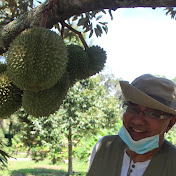
Durio pahangensis Ridl.,
known locally as Durian Kura-Kura Pahang, is a rare wild species endemic to Peninsular Malaysia, native to the tropical rainforests and lowland dipterocarp ecosystems of Pahang.
It grows as a small understory tree of up to 12 metres. Like most wild durians of these forests, it thrives in well-drained, acidic to neutral soils, ranging from sandy clay to deep, friable clay loam rich in organic matter.
A notable feature is cauliflory: flowers and fruits arise directly from the main trunk and thick woody branches rather than from thin outer twigs, so the fruits are described as cauliflorous. Small, spiny and globose, they are typically under 12 centimetres in diameter, considerably smaller than the commercial Durio zibethinus.
The edible aril covering the seeds is thin or almost absent, so the fruit holds little commercial value. Its significance lies in conservation and as a genetic resource within the wider durian gene pool.
Boschia griffithii Mast.,
also known as Durio griffithii (Mast.) Bakh., belongs to the family Malvaceae, tribe Durioneae. Its name reflects taxonomic opinion: World Flora Online and POWO accept Boschia, while many regional sources retain Durio. Maxwell Masters described it in 1875 from material collected by William Griffith.
Native to Peninsular Malaysia, Peninsular Thailand, Sumatra and Borneo, it grows in forests and along rivers up to about 500 metres.
The tree can reach 30 metres and bears small flowers, yellowish-white turning orange, on larger branches throughout the year. The orange-red, densely spiny fruits measure roughly 4 to 8 centimetres and split open on the tree, revealing glossy black seeds with little pulp. Monkeys disperse its seeds. Globally, it is Least Concern.
Conclusion
These wild durians are part of Malaysia's natural heritage and must be protected at all cost. Although their small fruits hold little commercial appeal, their genetic value is considerable. We must conserve them in the wild and in gene banks, and guard against biopiracy and the smuggling of seeds abroad.
Protecting such species in the wild, while safeguarding their germplasm in gene banks, is essential. Once lost, these unique genetic resources cannot be replaced. Their true value lies not in commercial appeal, but in the biodiversity legacy they leave for future generations.
DURIAN SOLO HUNTER
Email : duriansolohunter@gmail.com
Mobile : +60103377922 – Malaysia
