The Woman Who Made Van Gogh Famous
Beneath The Paint
0:00 / 0:00
The Woman Who Made Van Gogh Famous
647 просмотров · 2 недели назад
Beneath The Paint
182 подписчика
647 просмотров · 2 недели назад
When Vincent van Gogh died in 1890, he left hundreds of paintings that almost nobody wanted. Six months later his brother Theo died too, and everything went to Theo's widow, Jo Bonger. She was twenty-eight, with a baby and no income. This is how she made the world see him, in her own words from her diaries and letters.
0:00 The widow
0:40 Jo Bonger
1:31 Paris
1:54 The night of 29 January 1890
2:33 Meeting Vincent
3:10 July 1890
3:39 The task
4:48 Making him seen
5:22 1905
5:43 The letters
6:11 New York
6:36 September 1925
7:05 The wreath
Did you know her name before today? Tell me in the comments.
A NOTE ON THE PICTURES
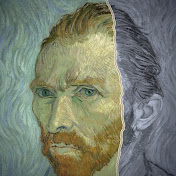
The room of canvases, the diary pages, the bundles of letters, the crates, the three volumes and the wreath are our own illustrations; the handwriting on them is not hers. The photographs of Jo and Theo, Villa Helma, the Stedelijk Museum, the graves at Auvers and the museum in 1973 are real, repainted in the film's brush.
SOURCES
Van Gogh Museum: "The Woman Who Made Vincent Famous"; "What Happened After Vincent van Gogh's Death? 1890-1973"; "Without Family, No Museum"; "How Did Vincent van Gogh Become Famous after His Death?".
Hans Luijten (ed.), Diaries Jo Bonger, Van Gogh Museum digital edition (bongerdiaries.org), English translation. Quoted entries: July 1887, 15 November 1891, 6 March 1892.
Hans Luijten, All for Vincent: The Life of Jo van Gogh-Bonger (2019); English edition, Jo van Gogh-Bonger: The Woman Who Made Vincent Famous (Bloomsbury, 2022).
Vincent van Gogh, The Letters (vangoghletters.org), letters 845 (Jo to Vincent, 29 January 1890), 847 (Theo to Vincent, 31 January 1890), 855 (Vincent to his mother, 19 February 1890), and the publication history of the letters.
Jo van Gogh-Bonger, memoir, introduction to Brieven aan zijn broeder (1914), English edition 1927.
V. W. van Gogh, memoir of his mother, in The Letters of Vincent van Gogh to his Brother (1927).
National Gallery, London: Sunflowers (NG3863), provenance.
IMAGES
Vincent van Gogh: Almond Blossom, The Harvest, The Potato Eaters, Wheatfield with Crows, Wheatfield under Thunderclouds, Portrait of Theo, Sunflowers (1889), The Bedroom (Van Gogh Museum); Sunflowers (National Gallery, London); The Starry Night (MoMA); The Church at Auvers, Self-Portrait 1889, Starry Night over the Rhône (Musée d'Orsay); Self-Portrait with Straw Hat (The Met); Birds' Nests; Pink Peach Trees (Kröller-Müller). Émile Bernard, Self-Portrait with Portrait of Gauguin (1888). George Hendrik Breitner, Amsterdam in the snow (Rijksmuseum). The British Museum Reading Room, engraving 1859 (Library of Congress). Photographs: Jo Bonger, Woodbury and Page, Amsterdam, April 1889; Jo with her son, Raoul Saisset, Paris, 1890; Theo van Gogh, 1878; Villa Helma, Bussum, 1920 (Gemeentearchief Gooise Meren); the Stedelijk Museum, about 1900; the graves at Auvers, Agence Meurisse, 1931 (BnF); a liner arriving in New York, 1911 (Library of Congress); the Van Gogh Museum, 1973 (Nationaal Archief / Anefo, CC0). All public domain, via the museums' open collections and Wikimedia Commons. Every frame was repainted in code, stroke by stroke.
MUSIC
Robert Schumann, Kinderszenen Op. 15: No. 7, Träumerei, and No. 1, Of Foreign Lands and Peoples. Public domain, from Mutopia Project editions (public domain), performed with MuseScore's MS Basic sounds (MIT licence). The other cues are original.
#VanGogh #JoBonger #ArtHistory #VideoEssay
