10 Ugly Soviet Watches That Are Secretly Worth A Fortune (You Might Own One)
Ray Dunlap
0:00 / 0:00
10 Ugly Soviet Watches That Are Secretly Worth A Fortune (You Might Own One)
132 просмотра · 7 дней назад
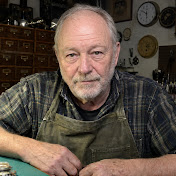
Ray Dunlap
37 подписчиков
132 просмотра · 7 дней назад
Most people see a Soviet watch and think foreign junk: plastic-feeling, rough around the edges, a name in Cyrillic they cannot pronounce, filed in the back of a drawer under a dead battery. That is exactly the mistake. After forty-one years at the bench opening backs that people were sure were worthless, Ray walks through ten Russian watches where the ugly one is the one a serious collector will drive three states to find, and shows you the four numbers that tell the truth.
The countdown runs from the Pobeda, the 1946 victory watch built on a French Lip design and marked ZIM from the First Moscow and Kirov factories, to the Raketa Big Zero on the caliber 2609 out of the old Petrodvorets plant near Leningrad. Along the way: the twin-barrel Slava 2427 from the Second Moscow Watch Factory, the Poljot Strela chronograph on the column-wheel 3017, the astronomical Raketa Kopernik, the Sturmanskie on the Valjoux-based 3133, the Vostok Volna precision 2809 from Chistopol, the Raketa 24-hour 2623 built for polar nights, and the Rodina, the first Soviet automatic from around 1956. Ray explains what quietly destroys each one — a refinished dial, a swapped movement, wrong hands, a flattened crystal, a buffed case back, a lost box and certificate — and then names number one: the Vostok Amphibia, built from 1967, the diver that came home by the thousands, where an early caliber 2209 in an early case separates a five-dollar curiosity from the watch collectors hunt. On these watches the number stamped on the movement, not the gold, is what tells you what you are holding.
Sources and further reading:
Juri Levenberg, Russian Wristwatches (multiple editions)
Poljot Strela and caliber 3017 references based on the Venus 150 chronograph design
Vostok Amphibia development history, Vostok-Chistopol factory records
