Ožragis (Lithuanian goat horn)
Markus Breuss
0:00 / 0:00
Ožragis (Lithuanian goat horn)
398 просмотров · 1 год назад
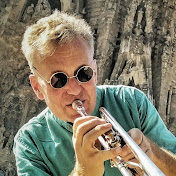
Markus Breuss
1,78 тыс. подписчиков
398 просмотров · 1 год назад
Ožragis
I bought this Ožragis, Lithuanian for goat horn, exactly one month ago, on August 22nd (after a gig at the Braille Satellite Festival) in Silenai, near Vilnius. I've had years of experience with "primitive" trumpets (and that IS a trumpet! A point of honor!), from didgeridoos to kanglings, but little to no experience with fingerhole horns. First of all, it's crazy how the instrument makers drill the fingerholes, or rather, where they choose the locations for the holes. There's nothing mathematical about it; who can calculate the chaotic interior of a horn? It's all about empirical trial and error, experience, instinct, and maybe even magic. The results are hardly well-tempered instruments like those from the Yamaha factory (thankfully); they can surprise with exotic tunings...
I have no proof, but I believe this type of fingerhole horn is the predecessor of the Renaissance cornett.
from the Lithuanian Wikipedia:
The goat horn is an ethnographic Lithuanian folk musical instrument made of goat horn with holes and a wooden mouthpiece. The goat horn was popular not only in Lithuania, but also in neighboring countries. Its traditional version has 2-6 sound holes. It can also be without them. In the ensemble orchestra, the goat horn is used with a birbynė mouthpiece, its range covers the interval of a fourth.
It is very simple to make a horn, but it requires a 20-50 cm long goat horn. A cup-shaped bone or metal reeded wooden mouthpiece is carved or inserted into its upper end, or a reed is tied. With the instrument made in this way, the craftsmen would produce one strong sound. To produce more sounds, the horn players would drill or burn several holes in the horn – from two to five, and sometimes more in a very long horn. It takes a lot of force to blow a horn, but the sound is very loud and can be heard from afar.
Shepherd's instrument
From ancient times until the 20th century BC, the goat horn was used by shepherds (especially shepherds), hunters, and musicians of village bands throughout Lithuania; it was played solo for herding and hunting signals, tirliavami, rallies, marches, solo or in pairs for song (and talali) and dance melodies, sometimes in a symphony, and accompanied by singing. According to Egidijus Virbašius, an expert in ethnomusic, the goat horn is an instrument exclusively for older shepherds and shepherds and was widespread throughout the territory of Lithuania. Old people say that at the end of the 19th century, an orchestra of village musicians of this composition played at weddings and other entertainments - an accordion, a violin, a drum, and a goat horn.
The goat horn repertoire consisted of special tirliavami, small-scale song and dance melodies. The music of the goat horn is characterized by a fast tempo, flexibility of melody, and diversity. Things worth mentioning: "Shepherd's March" - a melody for calling cows from the pasture, "The Applause of the Mistress", etc.
Also, in the ancient Lithuanian army, Ožragis was used to give signals during battle. In folklore, Ožragis is barely remembered.
Today
The horn is still unforgettable today. Many Lithuanian folk music ensembles and bands have this instrument. For example:
State Song and Dance Ensemble "Lietuva"
Folklore Ensemble "Alka" (Klaipėda)
Folk Music Band "RATUTO"
The horn is also used in contemporary music. Skirmantas Sasnauskas, a representative of modern jazz and one of the most significant creators of Lithuanian ethno-jazz, also uses the horn in his music. In addition to the trombone, the multi-instrumentalist's arsenal also includes old Lithuanian folk instruments such as the kanklės, lamzdelis, and bagpipes.
Please listen to the composition "Horn of the Plains";
Theme and Five Variations/Transformations
(with electronics) and a short improvised coda:
• Horn of the Plains
Goat Horn (Ožragis), traditional Lithuanian folk instrument, crafted by Egidijus Virbašius;
additional tunings made by Markus Breuss
Recorded in Capistrano (Nerja, Spain),
August 2025
And special thanks to Saulius Petreikis, Matas Aerobica, Daiva Vyčinienė & Modesta Kalkyte for connecting me with the right people ❤
