The Japanese Parenting Lesson Every Anxious Parent Needs to Hear
Understand Your Child
0:00 / 0:00
The Japanese Parenting Lesson Every Anxious Parent Needs to Hear
173 просмотра · 8 дней назад
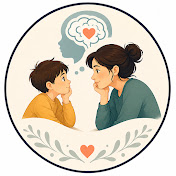
Understand Your Child
28 подписчиков
173 просмотра · 8 дней назад
In a Japanese preschool, two four-year-olds fight over a toy — and the teacher standing ten feet away does nothing. She isn't ignoring them. She's using a strategy she was specifically trained in, one that has a name, and one that quietly explains why so many anxious parents accidentally make their children more anxious, not less.
This video looks at what Japanese early education and family life can teach us about the moment right before we step in — the ten seconds most of us never let happen. We explore the concept of mimamoru (watching over as a form of protection), the idea of amae (healthy, permitted dependence), and why the same culture that lets a child struggle alone in a conflict also keeps that child sleeping between their parents at night.
Along the way we cover why anxious parenting so often inverts closeness and space, what attachment research actually says about clingy behavior, and why your child reads your face long before they hear your reassurance.
What you'll take away:
Why arriving too fast can leave a child's "can I handle this?" question permanently unanswered
The difference between non-intervention and deliberate, attentive waiting
Why independence grows out of security rather than replacing it
How social referencing means your expression carries more weight than your words
Three practical shifts you can use today: the pause, the face, and real responsibility
This isn't about one culture parenting better than another. Japan has its own serious struggles with pressure and mental health, and no country has solved this. But the underlying principle travels — it's just unusually visible there.
If this resonated, subscribe for more videos on child psychology and calm, informed parenting. Channel members help keep these videos coming.
Sources & further reading
Research on the "mimamoru" non-intervention approach in Japanese preschools, Early Childhood Education Journal (2020), Hiroshima University
Joseph Tobin et al., Preschool in Three Cultures (1989) and Preschool in Three Cultures Revisited (2009)
Takeo Doi, The Anatomy of Dependence (1971) — on the concept of amae
William Caudill & David Plath, "Who Sleeps by Whom? Parent-Child Involvement in Urban Japanese Families," Psychiatry (1966)
Sorce, Emde, Campos & Klinnert, "Maternal Emotional Signaling: Its Effect on the Visual Cliff Behavior of 1-Year-Olds," Developmental Psychology (1985)
John Bowlby, A Secure Base (1988); Mary Ainsworth's work on attachment and the secure base concept
Disclaimer
This video is for general educational and informational purposes only. It is not psychological, medical, or therapeutic advice, and it is not a substitute for assessment or treatment by a qualified professional. Psychological research describes patterns across groups; it cannot describe any individual child or family. Cultural practices are discussed to illustrate ideas, not to suggest that any one culture parents correctly. If you are concerned about your child's anxiety, development, or wellbeing, please speak with a licensed professional, your pediatrician, or a qualified child psychologist in your area.
