JFK Files: The Man Who Watched the Grassy Knoll Died in a Crash
Unsolved Americana
0:00 / 0:00
JFK Files: The Man Who Watched the Grassy Knoll Died in a Crash
22 530 просмотров · 7 дней назад
Unsolved Americana
851 подписчик
22 530 просмотров · 7 дней назад
On November 22, 1963, a railroad towerman named Lee Bowers had a view behind the fence on the grassy knoll that nobody on Elm Street had. He described it under oath, and less than three years later his car left a Texas highway near Midlothian and he was dead.
Bowers sat in a switching tower fifty yards west of the Texas School Book Depository. From there he could see the rear of the concrete pergola, the back of the wooden stockade fence and the trees on the knoll. The film follows his deposition of April 2, 1964, given to assistant counsel Joseph A. Ball at the Dallas post office building and printed in Volume VI of the Warren Commission hearings. Bowers described three cars circling the closed railroad parking lot. Two had out-of-state plates and 'Goldwater for 64' stickers, and one was muddy up to its windows. One driver held something up to his mouth. Bowers also saw two strangers near the triple underpass, heard three shots he could not place because of the echoes, and noticed something 'out of the ordinary' at the top of the incline.
In March 1966 Mark Lane filmed Bowers for Rush to Judgment. On camera Bowers spoke of 'a flash of light or smoke,' a detail that does not appear in the 1964 transcript. The film weighs Lane's charge that Ball steered Bowers away against the deposition's closing question and answer. It also covers what Lane cut from the final film: Bowers saying no one was at the fence when the shots were fired.
On August 9, 1966, the 41-year-old towerman's car drifted off the road near Midlothian at about fifty miles per hour and struck a concrete bridge abutment. No police accident report or autopsy is publicly available. Penn Jones Jr., editor of the Midlothian Mirror, put Bowers on his 'strange deaths' list in Forgive My Grief, along with claims about threats, an insurance policy and a doctor who described 'strange shock.' The film separates those claims from the record. It then covers the 1979 HSCA finding of a probable second gunman on the knoll, based on the Dictabelt, the 1982 National Academy of Sciences review that challenged that finding, and what the 2017 to 2025 releases do not contain.
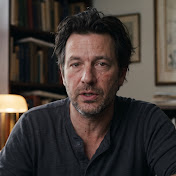
About the host: the presenter at the desk is an AI creation. His face, his movements and his voice were all produced by AI software, and no actual person stands behind him. He has never worked as a detective or a historian, and he does not represent Lee Bowers, his family or anyone else involved in the case. Bowers's words come from his sworn deposition and from the 1966 interview as the record describes it. The archival material is real: Warren Commission deposition transcripts and the Volume VI hearings, the National Archives file on Bowers, Warren Commission exhibits of Dealey Plaza, HSCA record forms, the 1980 FBI review of the HSCA acoustics, and photographs of Dealey Plaza and the Dallas rail yards.
What do you think Bowers saw at the top of the knoll in those seconds?
Follow the next case: / @unsolvedamericana
Case file
(0:00) — The man who saw the grassy knoll: Bowers' vantage point and first testimony
(1:19) — Bowers' account of unfamiliar vehicles and men in the railroad yards
(4:11) — The crucial filmed interview: new details and contradictions in Bowers’ statements
(8:09) — The fatal crash: claims made and what documents actually show
(11:05) — Aftershocks: absence of suppressed files and the open questions Bowers left
Records and images: Dallas Elm Street2 — Bradipus, CC BY-SA 3.0; Dallas July 2015 09 (Texas School Book Depository) — Michael Barera, CC BY-SA 4.0; Dealey Plaza from Triple Overpass — Jidanni, CC BY-SA 4.0; SchoolbookDepository — Weatherdrew at English Wikipedia, CC BY-SA 3.0; Dealey Plaza Dallas 2 — Fredlyfish4, CC BY-SA 3.0; Dallas County Administration Building — Ronincmc, CC BY-SA 3.0; DealeyPlazaAerial — Walloon, CC BY-SA 3.0; Dallas Union Station with the Amtrak Texas Eagle -21… — Fred Evad, CC BY 3.0; Dallas, TSBD — Jeanne boleyn, CC BY-SA 3.0; Dallas County Admin Building — Dakota L., CC BY-SA 4.0; El depósito de libros de Dealey — Potrosays, CC BY-SA 4.0; Dealey Plaza Historic District, focusing on the notorious… — Rafiul Alam, CC BY-SA 3.0; Dallas 2011 - Grassy Knoll clearly labeled — // jonCates, CC BY-SA 2.0; East at Daley Plaza, Aug 09 — An Errant Knight, CC BY-SA 4.0; Dallas,Texas.USA. - panoramio (1) — Roman Eugeniusz, CC BY-SA 3.0; Book Depository, Dealey Plaza, Dallas, TX — Edgarfrog5, CC BY-SA 4.0; Dallas,Texas.USA. - panoramio (2) — Roman Eugeniusz, CC BY-SA 3.0; Dealey Plaza Dallas 1 — Fredlyfish4, CC BY-SA 3.0; Dealeyplazaplaque — David Jones, CC BY 2.0; Book Depository Building from Dealey Plaza — Fredlyfish4, CC BY-SA 3.0; Adobe Audition waveform of sound impulses on the police… — Roger469, CC BY-SA 3.0. (Wikimedia Commons)
#JFK #GrassyKnoll #LeeBowers
