Aikikai Hombu dojo NHK Television Sports Classroom, 1
Carla Valverde
0:00 / 0:00
Aikikai Hombu dojo NHK Television Sports Classroom, 1
1 108 просмотров · 7 мес. назад
Carla Valverde
1,28 тыс. подписчиков
1 108 просмотров · 7 мес. назад
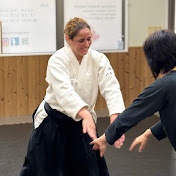
An educational television program in the 1970s features Aikikai Hombu Dojo instructors demonstrating Aikido. The demonstration video in question is an hour-long instructional presentation filmed on the mats of Aikikai Hombu Dojo. It was part of NHK’s “Television Sports Classroom” series, intended to teach Aikido to the public. The atmosphere is formal yet focused: the dojo space is brightly lit, with the kamiza (shrine area) at the front displaying calligraphy that reads “合気道” (Aikidō). The instructors and uke (training partners) wear traditional white gi and black hakama trousers, giving an immediate visual sense of tradition and discipline. There is no large audience visible – instead, a few students and the film crew stand by, reflecting that this is a staged class rather than a public exhibition.
The pedagogical style matches the Aikikai approach of the era: emphasize fundamentals and form before speed or power. The atmosphere is focused and respectful – you can almost sense the hush in the dojo broken only by the instructor’s voice, the thud of falls on tatami mats, and the sharp exhalations (kiai) during throws.
During the late 1970s, the Aikikai made organizational strides that would shape its future. In 1976, it took a major step in formally structuring the international Aikido community by creating the International Aikido Federation (IAF). The IAF was founded in Tokyo with the goal of coordinating Aikido’s global development and representing Aikido in international forums (for instance, it aimed to interface with other martial arts federations and possibly events like SportAccord or the World Games, even though Aikido is non-competitive). Alongside this, a Japan-based All-Japan Aikido Federation was established to unify the numerous regional clubs and university dojos under one umbrella. These moves indicate that by the mid/late-70s, Aikikai had shifted from a mostly family organization into a more bureaucratic one, albeit still led by the Ueshiba family. It’s notable that the IAF’s structure was modeled somewhat on Western democratic associations (member countries voting, etc.), whereas Aikikai itself remained a family-led iemoto system (hiearquichal authority). Navigating this dual structure was a new challenge – Moriteru Ueshiba in an interview acknowledged that while the Federation had its own rules, ultimately the Aikikai provided the unifying vision and standards for Aikido world-wide. That balance, struck in the late 70s, allowed Aikido to globalize without fracturing
Physically, Hombu Dojo itself was modernized just before the 1970s – the old prewar wooden dojo was replaced in 1967 by a new three-story concrete building in Shinjuku, Tokyo. So the demonstration video’s backdrop – a clean, white-walled dojo with modern tatami mats – is the product of that upgrade. Having a larger, modern dojo facilitated the postwar Aikido boom: more classes could be held and more students (including women and foreigners) accommodated. In 1970, special classes for beginners and for women were introduced at Hombu for the first time (reflecting a progressive inclusion effort). By the end of the 1970s, the Hombu Dojo and its affiliated schools across Japan had grown impressively. One statistic: by 1990 the Aikikai network included nearly 1,000 dojos in Japan – much of that expansion was seeded in the ’70s through efforts like encouraging university clubs and local dojo openings.
The Aikikai Hombu Dojo was the epicenter of this internationalization, orchestrating the export of Aikido and the development of instructors worldwide. In fact, the 1970s can be seen as the decade when Aikido truly became a global art, and Hombu’s policies and people were key drivers of that trend.
Even before the 70s, Hombu had started sending emissaries abroad. In the 1950s, France had André Nocquet (a French judo man turned aikidoka) train as an uchideshi at Hombu and bring Aikido home. In the early 1960s, the Aikikai dispatched several talented young Japanese instructors overseas in a more systematic way. For example, in 1964 Tadashi Abe went to France, Kazuo Chiba was sent to England in 1966, Nobuyoshi Tamura settled in France, Yoshimitsu Yamada and Mitsunari Kanai went to the United States (New York and Boston, respectively), Seiichi Sugano to Australia, Katsuaki Asai to West Germany, etc.. This diaspora of Hombu-trained teachers formed the nuclei of Aikido in those countries. By the early 1970s, these instructors had established dojos and national organizations (often under the auspices of Aikikai, e.g. Yamada helped found the USAF.
#aikido #aikikai #aikidotechniques #aikidoaikikai #japanesemartialarts
#budo
#budospirit
#martialartslife
#traditionalmartialarts
#martialartsdaily
#aikidoworld
#dojo #Martialarts #japan #japanese #Traditionaljapan
#martialartsphilosophy #tokyotokyo
#japaneseculture
#osensei
#harmony
#mindbodyspirit
#martialartscommunity #合気道
#合気道修行
#合気道家
#武道
#武道精神
#日本武道
#武道文化 #道場
#稽古
#武道の心
#日本文化
#精神修行
