Your Storm Door Is Costing You $200 a Winter - The $12 Part That Fixes It
Amos Barlow
0:00 / 0:00
Your Storm Door Is Costing You $200 a Winter - The $12 Part That Fixes It
30 просмотров · 9 дней назад
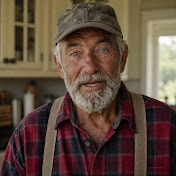
Amos Barlow
3 подписчика
30 просмотров · 9 дней назад
Save $3,500–$7,500 a year ⬇️
amosbarlow.com
A sand battery that heats a whole house costs seventeen to nineteen thousand dollars installed. The root cellar under an old farmhouse has held the whole winter, free, for a hundred and fifty years. Nobody ever put that on a spec sheet.
A man wrote me last month with one simple wish — oh, how I wish there was a way to harvest all that summer heat energy and save it for use in the winter. The answer had probably been under his feet the whole time, long before anybody sold him anything.
The problem is not that the knowledge disappeared. It is that nobody told you the house already had it, and the modern industry sold you the solution to a problem you did not have.
In this video I walk you through the five elements the pre-1900 house already owned, what each one does, and what is still recoverable in an old house that has these parts.
1. The central chimney — mass parked inside the insulated envelope so every ounce of heat falls back into the rooms. A kitchen wall next to an interior masonry chimney read 104 degrees on an infrared thermometer at six in the morning, fire dead for hours.
2. The masonry heater — one short, hot fire, then twelve to twenty-four hours of gentle radiated heat at 85 to 95 percent efficiency. Surface stays touch-safe all day.
3. The south stone wall — drinks the low winter sun all day and pays it back six to ten hours later, so noon's warmth arrives at nine at night when the fire is low.
4. The brick bake oven — fire out since breakfast, still cooking supper. Bread, then roast, then slow beans, all off one charge of wood. Stored heat you can put your hands on.
5. The root cellar — the one element with genuine seasonal lag. The earth below the frost line holds fifty to fifty-five degrees all year, barely moving. That is months of delay, not hours, and it costs nothing.
The Drake Landing Solar Community in Okotoks, Alberta, documented by CanmetENERGY and Natural Resources Canada, is the one system that literally banks summer heat for winter — 144 boreholes thirty-five metres deep, charged all summer, supplying over ninety percent of the neighborhood's winter heat. Real and verified. And it took 144 boreholes to do what the old cellar does passively.
The honest math: seventeen to nineteen thousand dollars installed is the current figure for a residential sand battery. The central chimney and the root cellar came with the house.
The title says this farmhouse stored summer heat for nothing. What that honestly means: it was built so it needed to store far less. No passive chimney literally banks July into a warm January room — that takes the engineering above. The free win is recovering the daily and seasonal mass the house already owns.
One safety rule that matters more than any other here: sealing old masonry tight without ventilation grows mould. The moisture has to have somewhere to go. Keep indoor humidity at thirty percent or under in the coldest month. Never trap a vapor barrier against cold stone. Use breathable materials. That is not a caution. It is a promise the physics makes you.
Nobody moved the chimney outside for your benefit. After about 1750, Georgian symmetry arrived — a balanced façade, a central hallway, matched windows on each side of the door. To get that look, the mass went to the gable ends, sometimes right outside the wall. It looked right from the road. It has cost you every winter since. Not a scheme. An industry built on a fashion decision that nobody ever undid.
Tell me what your old house still has — the center chimney, the south stone wall, a root cellar you have not opened in years, a bake oven that got bricked up when the furnace came in, or a boxed-in fireplace you have wondered about? Pick one and put it in the comments.
And if your father or your grandmother had their own way of doing it, share it. The little family tricks are exactly the kind of knowledge that gets lost when nobody writes them down. I read every single one.
Next time we walk the wall itself — the windows, the air, and the things still fixable with what the house already owns. Subscribe so you do not miss it.
Sources: Polar Night Energy, Pornainen, Finland. CanmetENERGY and Natural Resources Canada, Drake Landing Solar Community, Okotoks, Alberta. Historic New England, First Period colonial architecture. Buildingscience.com.
#thermalmass #masonryheater #centralchimney #rootcellar #sandbattery #seasonalheatstorage #oldfarmhouse #passiveheating #oldhouse #homesteading #heatingsystem #buildingscience #vintagehome #homeimprovement #amosbarlow
