Why a Stranger's Cringe Moment Makes Your Body React Like It's Yours
Human Pattern
0:00 / 0:00
Why a Stranger's Cringe Moment Makes Your Body React Like It's Yours
11 просмотров · 6 дней назад
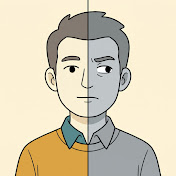
Human Pattern
11 просмотров · 6 дней назад
A stranger fumbles a note on a talent show, and a boy's whole body reacts before he's decided to care. This traces that reflex back to a 1990s lab in Parma, Italy, where a monkey's brain fired as if it had moved a hand it never touched — the accidental discovery of the mirror neuron. From there: a psychologist's studies on the universal face of embarrassment, a brain region called the anterior insula that treats someone else's humiliation like rotten food, and a fire circle where a group's survival depended on flinching together.
Why do cringe compilations get millions of views? Why does a whole crowd look away in the same instant when a stranger trips on the street? Why does an old video of your own most embarrassing moment still make you squirm years later? This is Human Pattern — the mechanism behind the reflexes you didn't choose and can't switch off.
0:00 The behaviour
1:16 Parma, Italy, Early 1990s
2:12 The Same Small Gesture
3:08 The Exact Same Circuitry
4:01 The Mechanism Is Old
4:53 Firing Before You Decide
SOURCES
Rizzolatti, G. et al. (early 1990s) — discovery of mirror neurons in macaque monkeys, University of Parma
Keltner, D. (1990s) — research identifying the universal nonverbal display of embarrassment
Neuroimaging studies on the anterior insula and shared activation during observed embarrassment and disgust
WATCH NEXT
The Voice Tell: How Your Throat Gives Away a Lie
• The Voice Tell: How Your Throat Gives Away...
#psychology #humanbehavior #mirrorneurons
