No one in Saskatchewan understood why SHE planted peas on her wheat land, until the 1988 drought...
MRS. WALKER
0:00 / 0:00
No one in Saskatchewan understood why SHE planted peas on her wheat land, until the 1988 drought...
12 просмотров · 12 дней назад
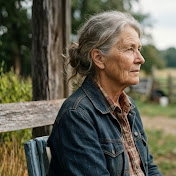
MRS. WALKER
25 подписчиков
12 просмотров · 12 дней назад
What do you do when you know something the entire county refuses to believe? What happens to the land when no one is willing to listen to what it has been asking for — for thirty years?
In the spring of 1977, Shirley Quist paid $840 for twelve bags of certified field pea seed that three of her neighbours had already turned down. She was a grain farmer outside of Outlook, Saskatchewan, running the same land her father had run before her. What she was about to do made no sense to anyone who heard about it. It would take eleven years — and the driest summer in three decades — for the rest of the county to understand what she had already known.
• The soil records Shirley's father Amos had kept since 1948, and what thirty-five years of continuous wheat had quietly been taking from the ground
• The papers from Commonwealth research stations, Indian agricultural bulletins, and a Manitoba soil scientist that Shirley had been reading since 1974 — knowledge no one else in her community was paying attention to
• Why the 1988 Prairie drought reduced the county average to nine bushels an acre while Shirley's legume-rotated fields came in at more than double that — on the exact same land, under the exact same sky
⏱️ TIMESTAMPS:
00:00 - The purchase nobody in Saskatchewan understood
03:20 - Who Shirley Quist was, and the filing cabinet her father left behind
08:10 - The first pea crop, and the eleven-bushel difference that closed the argument
13:45 - Expanding the rotation: 200 acres, a soil test kit, and numbers that told their own story
19:30 - The summer of 1988, and what happened to every field that hadn't been building anything
25:00 - What Shirley said at the podium in Saskatoon in 2003, and why it still holds
This is the story of twelve bags of field pea seed, eleven years of a rotation schedule, and one woman who understood what the soil needed long before the drought arrived to prove it.
