Malibu's $100M Beach Homes Are Vanishing Faster Than Expected — And Super El Niño Is Forming
Toxic Asset
0:00 / 0:00
Malibu's $100M Beach Homes Are Vanishing Faster Than Expected — And Super El Niño Is Forming
376 просмотров · 10 дней назад
Toxic Asset
197 подписчиков
376 просмотров · 10 дней назад
Malibu's $50M beach homes are losing the sand in front of them faster than expected, and NOAA puts the odds of a historic El Niño at 75%. This is how the fortune met the fine print.
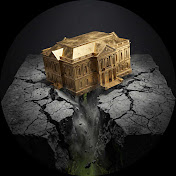
On September 8, 2026, the ground at Point Lechuza, at the western end of Malibu's Broad Beach, collapsed into a sinkhole roughly 25 to 30 feet deep and 60 feet long. Thirty-one oceanfront homes were red-tagged. The collapse came weeks before winter storm season, driven by a late-summer swell from Hurricane Marie. It happened on a coast where homes hold the three most expensive sales in California history: $210 million near El Pescador State Beach, about $200 million for an architect-designed concrete compound, and $177 million at Paradise Cove. Two days later, NOAA's Climate Prediction Center kept its El Niño Advisory in place. It put the odds of a very strong event above 90% and the odds of the strongest El Niño since modern records began in 1950 at 75%. The last two times the Pacific looked like this, in 1982–83 and 1997–98, Malibu beach houses ended up in the surf.
This investigation follows four decades of documented warnings. It covers coastal erosion, sea-level rise, a 36,000-ton emergency rock revetment, the California Coastal Act, FEMA's National Flood Insurance Program, and a Geologic Hazard Abatement District (GHAD) that spent more than $20 million without placing a single grain of new sand. It is the story of why some of the richest homeowners in America still can't buy a beach that stays put, and who pays when the ocean takes it.
IN THIS EPISODE:
How Carbon Beach ("Billionaire's Beach"), the Malibu Colony and Broad Beach became some of the most expensive oceanfront real estate on Earth. Includes a $35M Broad Beach sale at $8,140 per square foot and a 2026 contract at more than four times its 2002 price.
Why a Malibu beach behaves like a slow river of sand. Covers dam-trapped sediment, Broad Beach's west-facing exposure, roughly 600,000 cubic yards lost, and septic leach fields buried in the sand.
What El Niño does to the California coast. Draws on the USGS and Scripps study in Nature Communications: erosion 76% above normal across 29 beaches, with shorelines retreating an average of 115 feet.
The El Niño winters of 1982–83, 1997–98 and 2009–10: 33 oceanfront homes destroyed statewide, sandbagging, a failing revetment, and 4,100 feet of emergency rock protecting 78 homes.
The wall of no. Covers the NFIP's $250,000 building cap, the erosion exclusion, Coastal Act Section 30235 and the 1977 "existing structure" rule, managed retreat, and a rock wall sitting on nearly an acre of public land.
The GHAD: a $31M sand plan funded by 121 homeowners, 22,000 truckloads down Pacific Coast Highway, a 2019 Los Angeles ruling against the assessments, and $70,000+ yearly bills.
Who knew, and when, plus what California seller-disclosure law means on a beach that was visibly shrinking.
The reckoning at Point Lechuza. Who pays first (the owners), how far insurance reaches, and what the public pays in emergency response, highway repairs and lost beach.
CHAPTERS:
00:00 A sinkhole opens on Broad Beach
01:48 How the money got here
04:30 The flaw in the ground
07:12 When the damage became visible
10:07 The wall of no
13:37 Who knew, and when
15:52 The reckoning
18:27 What's left
19:45 Your verdict
SOURCES & METHOD:
This investigation draws on NOAA Climate Prediction Center advisories, National Weather Service warnings, and City of Malibu emergency proclamations and updates. It also uses California Coastal Commission and California State Lands Commission records, FEMA National Flood Insurance Program policy guidance, the California Coastal Act, and California appellate case law. The science comes from peer-reviewed research by the U.S. Geological Survey and Scripps Institution of Oceanography (Nature Communications), with additional history from the University of California Press, the Surfrider Foundation, the Malibu Times, wire reporting, and public property records. Dollar figures are tied to documented sales, assessments and filings. Verified facts are kept separate from reasonable inference throughout.
Educational and documentary content only, based on publicly available reporting, scientific studies, and official records. Not legal, financial, insurance, or real-estate advice.
Subscribe for a new investigation every week: the world's most expensive homes that became impossible to insure, impossible to sell, and impossible to save.
SUBSCRIBE: / @toxicasset
#Malibu #ElNino #CoastalErosion
