Pandit ShivKumar Sharma - Santoor Recital 1991 Live Concert
Shata Tantri Veena
0:00 / 0:00
Pandit ShivKumar Sharma - Santoor Recital 1991 Live Concert
10 093 просмотра · 4 года назад
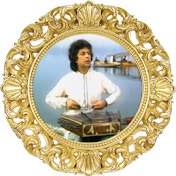
Shata Tantri Veena
18,7 тыс. подписчиков
10 093 просмотра · 4 года назад
Pt. Shiv Kumar Sharma - Indian santoor instrument.
(What I did in my studio: Improved sound quality from mono to stereo and organization of the sound panorama space, removing or reducing noise and squeaks, unifying the volume etc. Video connection into one whole, sorting the clips in the right order.)
Second channel with ShivJi music on Vimeo:
https://vimeo.com/user47924989/videos
Pt. ShivKumar Sharma Music Audio:
/ pt-shivkumar-sharma-reverb
My channel with my santoor music:
/ @michaelmarg
Contact: santoorveena@gmail.com
Michael Marg
Pandit Shivkumar Sharma was born in Jammu, India, on January 13, 1938, and passed away on May 10, 2022. He was an Indian musician and a Master of the santoor, also known as the shata-tantri veena, a Sanskrit term meaning a hundred-stringed instrument. His guru and father, Uma Dutt Sharma, taught him singing and tabla from an early age. Later, he introduced him to the santoor. At that time, the santoor was not considered a classical instrument. It was primarily used in Kashmir to accompany Sufi and mystical music. Pandit Shivkumar Sharma was a pioneer and the leading representative of a new approach to the instrument. He completely transformed and developed the santoor, improving its sound and greatly expanding its tonal range. He introduced new techniques, including the characteristic "glissando" effect, used the chikari strings to establish rhythm, and worked extensively on the instrument’s shape, materials, and hammers (kalams). He also changed the number and arrangement of the strings and introduced many of his own concepts and innovations, allowing the santoor to be performed on the classical music stage.
He developed his own system of playing the instrument and established a new playing position, placing the santoor on the lap to achieve better resonance and greater control over the sound.
All his talent and genius contributed to the creation, development, and refinement of the instrument. At the same time, he expressed his artistry through a subtle, extraordinary, and deeply masterful way of playing that remains unsurpassed. Few, if any, musicians have achieved such a degree of artistry, aesthetic beauty, dignity, and transcendental musical expression on the santoor.
His son and disciple Rahul Sharma, became the successor to his musical legacy. He continues many of his father's playing methods while also following his own path in the development of the instrument and its music. There are many of Shivkumar Sharma’s students and disciples around the world.
We owe the place of the santoor in modern classical music to him. Shivkumar Sharma was the visionary, the source, and the central figure who showed the world what this instrument could become and how it could be played. Through him, we learned what true artistry means, as well as what dedication to the development of one's talent can achieve.
What is truly remarkable is that no one has been able to master the instrument in quite the same way as he did. Without Shivkumar Sharma, the santoor music we know today and the development of the instrument in the form in which it is now played would not exist as we know it. He was an absolute musical genius: a composer, a thinker, a sage, and a profoundly wise and gentle man. He spoke about the creative power that exists within us, and about how, when he focused deeply, a melody would emerge through him. He did not claim that he himself created it. Rather, he believed that it was a greater force, vibration, an inner sound, Anahad Nad, that had created the entire universe and expressed itself through music. Musicians of such extraordinary depth cannot simply be trained; they are born once in many millennia. We will always remember him as our Master and Guru. This channel is dedicated to the worship, remembrance, and homage of Pandit Shivkumar Sharma Ji, who gave us music of extraordinary poetry, heavenly beauty of melody aad sound. It was he who brought the santoor to worldwide recognition. It was he who promoted the instrument around the world, taking it far beyond its traditional roots in Kashmir. His name has become synonymous with the santoor itself. His passing was a great tragedy and an immeasurable loss. He was, and remains, an authority and an inspiration to us, his disciples, not only in music but in every area of life.
