What If You Got Lost in Deep Space, Forever?
COSMUNE
0:00 / 0:00
What If You Got Lost in Deep Space, Forever?
5 320 просмотров · 13 часов назад
COSMUNE
3,45 тыс. подписчиков
5 320 просмотров · 13 часов назад
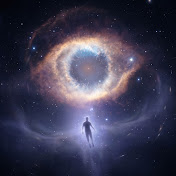
What would happen if you travelled millions of kilometres from Earth and suddenly had to find your way home? In deep space, there are no roads, familiar landmarks, or fixed horizon. Even the stars that seem permanent from Earth are moving through the galaxy. Knowing where you are is not the same as knowing how to get back.
Spacecraft navigation is one of the great challenges of exploration. Earth orbits the Sun, the Sun moves through the Milky Way, and every destination exists in a changing three-dimensional landscape. A spacecraft cannot simply follow a constellation or point toward a bright blue dot. NASA’s Deep Space Network, radio ranging, Doppler measurements, and precise clocks help mission teams track spacecraft across immense distances. Researchers have also explored whether rapidly rotating neutron stars called pulsars could guide spacecraft independently. But every method has limitations. How do you find home when Earth keeps moving, signals take time to arrive, and the distance between stars is almost impossible to imagine?
---
🔭 WHAT THIS VIDEO COVERS:
✅ Why constellations can be misleading when viewed from a different position in space
✅ How Earth’s orbit makes our planet a moving target
✅ How the Sun’s motion through the Milky Way complicates celestial navigation
✅ How NASA’s Deep Space Network tracks spacecraft using radio signals and Doppler shifts
✅ Why communication delays make real-time control impossible across vast distances
✅ How star trackers, gyroscopes, and inertial navigation estimate a spacecraft’s orientation and motion
✅ What Voyager 1 reveals about travelling beyond the heliosphere
✅ How pulsars could act as precise cosmic clocks for autonomous navigation
✅ What NASA’s NICER mission and SEXTANT experiment demonstrated about X-ray pulsar navigation
✅ Why space has no GPS grid or universal map
✅ Whether a spacecraft travelling light-years away could calculate a reliable route back to Earth
📊 KEY FACTS IN THIS VIDEO:
🔹 *About 9.46 trillion kilometres* — The distance light travels in one year.
🔹 *About 4.24 light-years* — The distance to Proxima Centauri, the closest known star to the Sun.
🔹 *About 8 minutes and 20 seconds* — The time sunlight takes to reach Earth.
🔹 *1977* — The year Voyager 1 launched.
🔹 *2017* — The year NASA’s SEXTANT experiment demonstrated X-ray pulsar navigation aboard the International Space Station.
---
Cosmune is a Hindi-language space science channel exploring the universe through long-form, immersive documentaries. From black holes and interstellar travel to the James Webb Space Telescope and the deepest questions in cosmology, each journey combines real science with cinematic storytelling. Our calm Hindi narration is made for curious minds who value depth, wonder, and thoughtful explanations.
This documentary is approximately 2 hours long and designed for unhurried, immersive listening. Put on your headphones, dim the lights, and follow the journey into deep space.
🔔 Subscribe to Cosmune for more long-form journeys into space, time, and the universe.
👍 Like this documentary if it changed how you think about travelling through space.
💬 Comment: Which would you trust most to find your way home: stars, radio signals from Earth, or pulsars?
🔖 TAGS & TOPICS COVERED:
Deep Space Navigation | Finding Earth in Space | How Spacecraft Navigate | Lost in Deep Space | Voyager 1 Mission | NASA Deep Space Network | Pulsar Navigation | Interstellar Travel | Cosmic Distances | Space Documentary Hindi | Cosmune | Hindi Space Science | Space Science 2026 | Astronomy Explained
#Cosmune #SpaceHindi #SpaceScience #DeepSpace #SpaceDocumentaryHindi #UniverseHindi #AstrophysicsHindi #HindiScience #DeepSpaceNavigation #SpaceNavigation #InterstellarTravel #Voyager1 #PulsarNavigation #CosmicDistances #LostInSpace #SpaceExploration #Astronomy #CosmologyHindi #Universe #NASA
Lie back, close your eyes, and imagine the long journey home through an endless universe.
