Schumann - Mondnacht, Moonlit Night. Margaret Price, soprano. Liederkreis.
Above the Mists
0:00 / 0:00
Schumann - Mondnacht, Moonlit Night. Margaret Price, soprano. Liederkreis.
33 528 просмотров · 12 лет назад
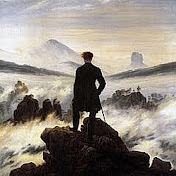
Above the Mists
6,73 тыс. подписчиков
33 528 просмотров · 12 лет назад
Robert Schumann - Mondnacht ("Es war als hätt der Himmel...") Joseph von Eichendorff, Song for Voice & Piano (Liederkreis), Op. 39/5 (1840)
Margaret Price, Soprano; James Lockhart, Piano.
Mondnacht
Es war, als hätt' der Himmel
Die Erde still geküsst,
Dass sie im Blütenschimmer
Von ihm nun träumen müsst'.
Die Luft ging durch die Felder,
Die Ähren wogten sacht,
Es rauschten leis' die Wälder,
So sternklar war die Nacht.
Und meine Seele spannte
Weit ihre Flügel aus,
Flog durch die stillen Lande,
Als flöge sie nach Haus.
Joseph von Eichendorff
Moonlit Night
It was like Heaven's glimmer
caressing Terra's skin,
that in Her blossoms' shimmer
She had to dream of Him.
The breeze was gently walking
through wheatfields near and far;
the woods were softly talking
so bright shone ev'ry star.
And, oh, my soul extended
its wings through skies to roam:
O'er quiet lands suspended,
my soul was flying home.
Joseph von Eichendorff
When Robert Schumann wrote to his wife explaining that, "The Eichendorff cycle is my most Romantic music ever, and it contains much of you," one of the works of Liederkreis, Op. 39, that he was probably referring was "Mondnacht," Op. 39/5 (Moonlight Night). Written in 1840 while he was in Berlin, the piece is considered one of the world's loveliest nocturnes and is believed to have been first sung by Mendelssohn. The ambience of this slow, sustained, strophic song, is based on a few of the poet's delicate words that describe the tender rapture of twilight. It is built almost entirely on one simple melodic eight-bar phrase that is repeated twice to form each verse, except the last, in which the phrase is preceded by eight measures of new material. The prelude reappears between the verses to provide separation and cohesion, making the work's structure comparable to medieval barform. Schumann brought the poem to life in a number of ways. First, he attempted to give the work's phrases endless depth by adding short breaks for breath and by employing suspended fifths. Secondly, he emphasized the union of the earth and sky by repeatedly spelling out the word "ehe" (marriage) in the piano part with the notes E, B, E, creating an intense fusion between music and meaning. Thirdly, between phrases, he used the piano to imitate the rustling of the wings of his soul as it "flew over the countryside." Upon returning home from Berlin, Schumann presented a copy of the work to his mother-in-law, in celebration of her birthday.
Art: Caspar David Friedrich
