Lamia — Before They Feared Me, I Was a Mother | Epic Cinematic Greek Myth Song
TokikoReich2026
0:00 / 0:00
Lamia — Before They Feared Me, I Was a Mother | Epic Cinematic Greek Myth Song
25 просмотров · 1 день назад
TokikoReich2026
107 подписчиков
25 просмотров · 1 день назад
"Before they feared me, I was a mother.
Remember where my tale begins."
Lamia's story begins before the monster.
This 9-minute, 23-second epic cinematic Greek mythology song follows the tragic journey of Lamia: a queen of Libya, a lover of Zeus, and a mother whose children were taken from her.
Told through her own imagined voice, this original myth-inspired song asks us to remember the life that existed before her name became a warning. Beneath its tragic atmosphere is an intimate plea: do not let what I became erase everyone I once loved.
THE MYTH BEHIND THE SONG
Lamia's legend survives in different, sometimes conflicting accounts. There is no single version containing every detail found in later retellings.
In a tradition attributed to the ancient historian Duris and preserved by Photius, Lamia was a beautiful woman loved by Zeus. Hera, jealous of their union, destroyed the children Lamia bore him. Grief disfigured Lamia, and she began seizing and killing the children of others.
Diodorus Siculus also describes Lamia as a beautiful Libyan queen who lost her children. His account emphasizes her envy of other mothers and the cruelty that followed, without telling the same story of Hera's intervention. Her name became a source of terror for children.
Some versions add another torment: Hera denied Lamia sleep, and Zeus gave her the ability to remove her eyes, offering relief from her wakefulness. The removable eyes also appear in Plutarch, who mentions Lamia keeping them in a jar while she sleeps.
These traditions hold a terrible contradiction: the mother who suffered the loss of her children became a cause of that same suffering for others.
THE VOICE AT THE HEART OF THIS SONG
This retelling begins with the queen and the mother: the small hands reaching for her, the bedtime songs, the children for whom a crown meant nothing.
Then come the empty beds, the unanswered prayers, and a world that continues while hers has stopped.
As the story darkens, Lamia does not remain only a victim. She crosses a threshold and brings grief into another mother's home. The lyrics do not excuse that act or suggest that suffering makes cruelty right.
"Don't call me blameless—call me broken."
That distinction matters. Her suffering does not erase her responsibility. Her responsibility does not erase the life she had before.
When she sings, "Before they feared me, I was a mother," she is not asking us to forget the children she harmed. She is asking us not to forget her children either.
The song's emotional center is not a triumphant declaration or a demand for forgiveness. It is a heart's cry that does not need to be loud: remember that this feared name once belonged to someone who sang a lullaby.
A MYTH-INSPIRED INTERPRETATION
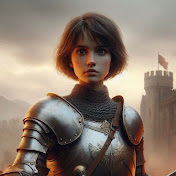
This is a poetic retelling, not a claim to reproduce one definitive ancient text. Its first-person narration, private family memories, and imagined inner life were created for this song. The visual character designs are artistic interpretations, not reconstructions of a single ancient description.
The eye motif becomes an image of grief that cannot simply be shut out. Removing her sight cannot remove the children from her memory.
The returning lullaby offers no easy absolution. It preserves the fragile memory of love within a story that has become almost unbearable. Remembering the mother does not undo the tragedy; it asks us to hear more than the warning attached to her name.
WHY I WANTED TO TELL HER STORY
I wanted to make room for the woman within the legend.
Not only the figure people fear, but the mother standing in a silent room.
Not only the name spoken to frighten children, but the voice that once comforted them.
Not a denial of the darkness, but a refusal to let the darkness become her entire history.
Creating this music video has meant a great deal to me. My hope is that, for these nine minutes, you can listen to Lamia not only as a creature from mythology, but as the voice of this particular tragedy: love, loss, guilt, and a desperate wish to be remembered fully.
"But when you tell them of the monster,
Tell them where the grief began."
Thank you for listening—and for remembering where her tale begins.
#Lamia #GreekMythology #EpicCinematicMusic
