Bristol Blenheim Mk 1, L6739, G BPIV
High Flight
0:00 / 0:00
Bristol Blenheim Mk 1, L6739, G BPIV
1 655 просмотров · 9 л. назад
High Flight
47,1 тыс. подписчиков
1 655 просмотров · 9 л. назад
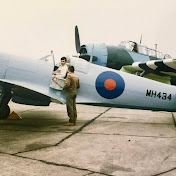
Bristol Blenheim Mk.1, L6739, G-BPIV, operated by the Aircraft Restoration Company at Duxford on behalf of Blenheim (Duxford) Ltd, seen here on the 'practice' day prior to The Fighter Collection's 'Flying Legends' Airshow 2017 at the Imperial War Museum, Duxford, UK.
The Bristol Blenheim is a truly unique aircraft and was a milestone in the history of British aviation as the first stressed skin aeroplane accepted by the RAF. It bore the brunt of the early war bombing effort and its crews paid a heavy price defending the nation, Winston Churchill paid homage to their bravery comparing them to the 'Charge of the Light Brigade'. At the start of the war the RAF had 1089 Blenheim bombers in service, more than any other aircraft, however this is now the only flying example left in the world and serves as a lasting memorial to those who crewed them.
The restoration wouldn't have been possible without the ARC Volunteers who put in over 25,000 man hours to help the rebuild and the Blenheim Society whose relentless fund raising helped to keep the project afloat.
The Mk.1 Nose of this Blenheim has an interesting history. It began life as a Bristol Blenheim Mk.1 built under license by AVRO and issued to 23 Squadron on 2nd September 1939, serial number L6739. It served as a night fighter throughout the Battle of Britain before being struck off charge in December 1940 after which it went back to Bristol's and was left in their scrapyard. After the war an innovative electrician by the name of Ralph Nelson, who was working at Bristol's, was given permission to buy the nose which he then went on to convert into an electric car. After mounting it to the chassis of an Austin 7 he fitted an electric motor of his own design and registered it as a 'Nelson' with the index JAD347. Ralph drove the car for 10 years before it suffered a fire which damaged the systems beyond repair, however, he had heard of the ongoing 2nd Blenheim restoration at Duxford and donated the car to the project in 1992. Thankfully Ralph had kept most of the original systems such as the control column, rudder pedals, trim system and fittings including the seat and frame, so after hours of reverse engineering and a huge amount of fabrication work the much loved car was turned back into the Blenheim nose seen here. If you have a chance to see it up close look for the tax disc in one of the front windows, which was left inside as a lasting legacy to Ralph and his car without which the restoration project would not have been possible.
The Bristol Blenheim was originally developed as the civil-orientated Type 142, in response to Lord Rothermere’s challenge to produce the fastest commercial aircraft in Europe. First flying in April 1935, the Air Ministry was quickly impressed by its performance and ordered a modified design as the Type 142M, to serve in the Royal Air Force as a bomber. On 10 March 1937, deliveries of the newly named Blenheim commenced to RAF squadrons.
The Blenheim was one of the first British aircraft to feature an all-metal stressed-skin construction, retractable landing gear, flaps, a powered gun turret and variable-pitch propellers. The design of the Blenheim proved to be readily adaptable, and was modified to serve in roles such as an interim long-range fighter and as a night fighter, pending the availability of a more advanced fighter derivative of the Blenheim, the Beaufighter. A more capable bomber derivative, the Beaufort, was also developed, being both larger and heavier than the Blenheim.
A Canadian-built variant named the Bolingbroke was used as an anti-submarine patrol aircraft and trainer. The fuselage of this aircraft aft of the cockpit is actually an ex Canadian Bolingbroke. The Blenheim Mk.1 outran most biplane fighters in the late 1930's but stood little chance against the German Messerschmitt Bf109 during daylight operations of the Second World War, though it proved successful as a night fighter. The Mark IV variant was equally unsuccessful in its daylight bombing role, suffering many losses in the early stages of the war. The Blenheim was also used by a wide range of overseas operators, as well being produced under licence in Finland and Yugoslavia.
Read here an exceptionally interesting article covering this aircrafts operation - http://vintageaviationecho.com/arco-b...
Video and Audio content is
Copyright © 2017 S Keeler
This video and audio material may not be reproduced in any form (except as the videos Youtube embedded video option on any other website), without written permission.
