He Was Painted Looking At Her. Then He Wasn't.
Museum Forensics
0:00 / 0:00
He Was Painted Looking At Her. Then He Wasn't.
154 просмотра · 9 дней назад
Museum Forensics
1 подписчик
154 просмотра · 9 дней назад
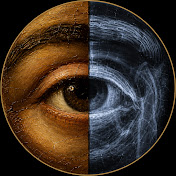
Infrared reflectograms of Jan van Eyck's Arnolfini Portrait show something the finished painting hides: in the underdrawing, the husband is looking straight at his wife. In the painting, he isn't.
Completed in 1434, the Arnolfini Portrait is one of the most analysed paintings in European art. In 1934 the art historian Erwin Panofsky argued it was not a portrait at all but a legal document — a record of a marriage, with Van Eyck himself signing the wall as witness. Under that reading, every object in the room becomes evidence: the dog for fidelity, the single lit candle for the eye of God, the discarded shoes for holy ground.
Then the National Gallery in London assembled a complete infrared reflectogram of the panel in 1994, and the drawing underneath told a different story.
The dog isn't in the underdrawing. Neither is the chandelier, the candle, the shoes, the prayer beads, or the figure of Saint Margaret. The shadow hatching Van Eyck drew on the floor runs straight through where the dog stands — proving the infrared is penetrating the paint and that nothing was drawn there. Every object the symbolic reading depends on was added late, directly onto the picture.
The signature is late too. Because the inscription sits above the mirror, it could not have been planned before the ten-sided mirror frame existed. There are no ruled guide-lines for it, and it isn't level.
And the figures changed. There are three versions of the husband's feet. The whole arm was redrawn to turn his raised hand from forbidding to welcoming. In the underdrawing his face is turned towards his wife and his fingers grip hers more firmly. In the finished picture his glance has moved away from her, towards the two visitors reflected in the mirror — while her eyes have shifted towards him.
Archival records place Costanza Trenta, the likely sitter, dead more than a year before the painting is dated.
No symbolism. No guessing. Just what the instruments recorded.
CHAPTERS
0:00 Ninety years of reading this room
0:35 Bruges, 1434
1:20 Panofsky's answer
2:35 What the infrared shows
4:55 The mirror had eight sides
6:15 A letter from February 1433
7:20 The corrections
9:00 What this evidence cannot prove
9:30 Trial and error
SOURCES
Billinge, R. and Campbell, L., "The Infra-red Reflectograms of Jan van Eyck's Portrait of Giovanni(?) Arnolfini and his Wife Giovanna Cenami(?)", National Gallery Technical Bulletin, Vol. 16 (1995), pp. 47–60.
Saunders, D. and Cupitt, J., "Elucidating Reflectograms by Superimposing Infra-red and Colour Images", National Gallery Technical Bulletin, Vol. 16 (1995), pp. 61–65.
Panofsky, E., "Jan van Eyck's Arnolfini Portrait", The Burlington Magazine, LXIV (1934), pp. 117–27.
Koster, M., "The Arnolfini double portrait: a simple solution", Apollo (September 2003).
Jan van Eyck, Portrait of Giovanni(?) Arnolfini and his Wife Giovanna Cenami(?) (NG 186), 1434. Oak, 84.5 × 62.5 cm. The National Gallery, London. Painting in the public domain.
MUSIC
End of the Era by Kevin MacLeod is licensed under a Creative Commons Attribution 4.0 licence.
https://creativecommons.org/licenses/...
Source: http://incompetech.com/music/royalty-...
Artist: http://incompetech.com/
Museum Forensics investigates famous paintings through physical evidence — X-rays, infrared reflectography, pigment analysis and restoration records. New investigation every week.
