25 Wild EDIBLE Plants Most Americans Ignore (You’ve Walked Right Past Them)
Amos The Root Man
0:00 / 0:00
25 Wild EDIBLE Plants Most Americans Ignore (You’ve Walked Right Past Them)
189 просмотров · 11 дней назад
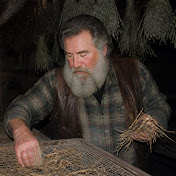
Amos The Root Man
177 подписчиков
189 просмотров · 11 дней назад
You have walked past food today. On the shoulder of the road, along the fence line, in the ditch nobody mows, there is a wild pantry sitting in plain sight. This is a countdown of twenty-five wild plants most Americans walk right past, and it closes on the one habit that matters more than every plant on the list combined.
Before a single name, hear the rule this whole video sits on, because it is the difference between a free meal and a trip to the emergency room. Never eat a wild plant unless you are one hundred percent certain of the identification. Not fairly sure. Certain. Several of these plants have cousins that will make you sick, and a couple have cousins that can kill you. When in doubt, leave it alone, check a real regional field guide, or ask somebody local who knows the ground. Some of what is here must be cooked or leached before it is safe. This is a look at what grows wild around you, from an old root man who has done it for sixty years, not permission to eat whatever you find in a ditch because a voice on the internet said it was fine.
In this video, an old root man counts down 25 wild edibles, how to know each one, and the cautions that keep you safe.
You will discover:
✓ The fire-loving pink spike whose young shoots taste of cucumber and whose dried leaves make a northern tea ✓ The forearm-long root sold in Japanese markets as gobo, and the toxic rosette it must never be confused with ✓ The thorny cane fruit about as safe and forgiving as wild food gets ✓ The berry you may only eat one color, only when ripe, and only cooked, the single most important caution here ✓ The tree tea that is clean and resinous from a true pine, and a funeral from the deadly look-alike that is not a pine at all ✓ The acorns every oak drops, bitter and rough raw, and the leaching that turns them into flour ✓ The roadside weed whose crushed leaf is the oldest field dressing for a scrape or a sting ✓ The lacy white flower head that feeds you and the deadly one it can be mistaken for ✓ Why hawthorn and rowan are both fine food sitting right beside things that are not, and how you tell ✓ Why the number-one item on this whole list is not a plant at all
The thread under all twenty-five is that foraging is not about knowing the most plants. It is about being certain of the few you know cold and leaving everything else alone. That is why the last item is not a plant but the rule itself: twenty-four wild foods are not worth one trip to the emergency room. What keeps a forager alive for sixty years on a mountain is not a long list, it is the discipline to walk past anything they cannot name on sight, every single time, no matter how hungry or how sure they feel. The plants that need cooking get cooked. The berry gets eaten only ripe and only cooked. The tea gets brewed only when the species is beyond doubt. Certainty first, always, and appetite a distant second.
Here is the part worth keeping. None of this knowledge was lost because it stopped being true. A dandelion is as edible now as it was for your great-grandmother; the grocery store just made it easy to forget. Learning even three or four of these plants cold, the ones with no dangerous look-alike, blackberry and dandelion and plantain and pine, is a small, real independence nobody can take from you, and it costs nothing but the care to learn them right. And if nobody ever taught you which ditch weeds were dinner, that is not on you. It got forgotten one generation at a time, and it can be learned back the same way, carefully, one certain plant at a time.
Tell us in the comments which of these you already know on sight, and which one grows where you live that you never once thought to look at twice.
#Foraging #WildEdibles #WildFood #Elderberry #Burdock #Survival #PlantIdentification #Bushcraft #SelfSufficiency #OldWays
