The Hidden Structure Behind Every Utopian Movement
Voegelin's Philosophy
0:00 / 0:00
The Hidden Structure Behind Every Utopian Movement
86 просмотров · 2 мес. назад
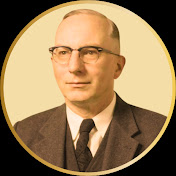
Voegelin's Philosophy
52 подписчика
86 просмотров · 2 мес. назад
🔗 The Voegelin Quotes Companion: 50 Essential Passages with Context → https://voegelin.classicalminds.academy
50 of Voegelin's most essential passages — each decoded in plain language so you can finally read the source, not just the summary.
For the moment when a video isn't enough and you need to hear it from him directly.
---
Every utopian movement promises to fix the world. What if they're all running on the same engine — and what if that engine is older than any of them?
In 1938, Eric Voegelin published a diagnosis of National Socialism so precise that the Gestapo opened a file with his name on it. He and his wife fled Austria within weeks. The argument that forced him out of his country wasn't political — it was structural. He had identified the hidden spiritual architecture behind the movement. And he spent the next fourteen years proving that architecture wasn't unique to fascism.
In The New Science of Politics (1952), Voegelin identified six structural features shared by every Gnostic movement — ancient and modern. Not Gnosticism as an insult. As a clinical diagnosis. A six-part engine that recurs across history with an almost eerie consistency: the conviction that the world is fundamentally wrong, a traceable cause for that wrongness, a hidden knowledge available only to the enlightened, a transformation achievable within history, an elect who carry the mission, and a resolution that — once achieved — will be total and permanent.
The question this video explores is what happens when you run that checklist against movements most people assume are opposites. Marxism passes every test. So does progressive identity politics. And so — this is where it gets uncomfortable — does a strand of Christian political thought that believes the right application of biblical law will permanently heal American culture.
If you've been wondering why every utopian movement seems to collapse into the same patterns of purity enforcement, scapegoating, and betrayal — Voegelin named the reason in 1952. The disorder isn't ideological. It's structural. And it doesn't pick sides.
▸ The book that forced Voegelin to flee — and what it actually argued
▸ The six-feature checklist that identifies any substitute religion
▸ Why Marx, woke progressivism, and Christian dominionism pass the same test
▸ The one distinction Voegelin made that changes everything
▸ What the soul in order looks like — and why it's harder than any solution
This video is for the person who has watched ideological movements — on every side — consume people they know, and wants a framework that actually explains the mechanism, not just the symptoms. If you've sensed that something deeper than politics is driving the cultural disorder around you, Voegelin gave it a name. This is that name, fully explained.
If this is the kind of thinking you want more of — subscribe. New videos on Voegelin, political religion, and the ordered life every week.
The disease has a name. The soul in order is still possible.
eric voegelin, gnosticism political theory, modern political religion, utopian movements, christian nationalism, woke ideology structure, substitute religion, second reality voegelin, immanentize the eschaton, spiritual disorder politics
