Laut Aao Tum Mere Paas "Baba" | Dr. Hemraj Chandel | Ustad Abdul Rashid Khan Saheb
Dr. Hemraj Chandel
0:00 / 0:00
Laut Aao Tum Mere Paas "Baba" | Dr. Hemraj Chandel | Ustad Abdul Rashid Khan Saheb
482 просмотра · 1 мес. назад
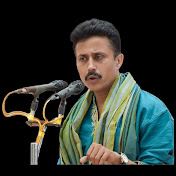
Dr. Hemraj Chandel
598 подписчиков
482 просмотра · 1 мес. назад
Singer lyrics and Composition : Dr. Hemraj Chandel
Music : Aar Vee Rajesh Verma
Edited: Abhay Thakur
“Lout Aao Tum Mere Pas” is best understood not merely as a ghazal, but as a deeply personal musical tribute from Dr. Hem Raj Chandel to his revered Guru, Padma Bhushan "Baba" Ustad Abdul Rashid Khan Saheb.
The title itself—“Lout aao tum mere pas” (“Come back to me”)—carries an unmistakable feeling of longing and remembrance. The song evokes the emotional bond between a disciple and his Guru, where music becomes a medium through which memories, teachings, affection, and gratitude continue to live.
The ghazal’s emotional strength lies in this combination of viraha (separation), devotion, gratitude, and musical remembrance. Its appeal is therefore both artistic and spiritual: it reminds us that a true Guru never completely leaves a disciple. His voice, values, musical discipline, and blessings continue to resonate long after his physical departure.
In this sense, “Lout Aavo Tum Mere Pas” becomes a humble musical pranam—a heartfelt salutation from a disciple to his Guru, preserving the timeless relationship between teacher, student, and the sacred tradition of music.
Padma Bhushan "Baba" Ustad Abdul Rashid Khan Saheb.
Padma Bhushan Ustad Abdul Rashid Khan, popularly known by his pen name “Rasan Piya,” was one of the most distinguished vocalists of the Gwalior tradition of Hindustani classical music. Born on 19 August 1908, he belonged to a celebrated musical family. His father, Ustad Behram Khan, had earlier left his native Gwalior and settled in Kasba Salon near Rae Bareli.
Abdul Rashid Khan received his initial musical training from his Bade Baba, Ustad Bade Yusuf Khan. This rigorous early training was followed by further guidance from senior members of his family, who were deeply rooted in the Gwalior gayaki. Through his exceptional talent, dedication, and years of disciplined practice, he developed and enriched the Gwalior tradition while preserving its essential character and aesthetic values.
Although primarily renowned as a Khayal vocalist, Ustad Abdul Rashid Khan was equally accomplished in Dhrupad, Dhamar, and Thumri. His music was distinguished by extraordinary breath control, intricate Gwalior-style layakari, and an exceptional command of swar. His ability to produce a pure and perfectly controlled note even in the later years of his life was truly remarkable.
His musical career extended over nearly nine decades, during which he participated in countless music conferences and witnessed the evolution of Hindustani classical music across almost a century. His immense contribution to Indian classical music earned him numerous awards and honours from reputed institutions, including the Uttar Pradesh Sangeet Natak Akademi and Banaras Hindu University. He received the ITC Award in 1994, the prestigious Sangeet Natak Akademi Award in 2009, and the 35th All India Bhuwalka Award in 2010 for his outstanding contribution to Indian classical vocal music. In recognition of his distinguished service to the field, the Government of India conferred upon him the Padma Bhushan in 2013.
Ustad Abdul Rashid Khan was not only a gifted vocalist but also a prolific composer, writer, and poet. Under the pseudonym “Rasan Piya,” he composed more than two thousand bandishes and other poetic works. Many of the compositions he performed were his own, reflecting his deep understanding of melody, rhythm, poetry, and the traditional aesthetics of Hindustani music.
He remained dedicated to teaching and nurturing the next generation of musicians. At the ITC Sangeet Research Academy, where he served as a guru, he trained and inspired numerous students, thereby helping to carry forward the rich legacy of Hindustani classical vocal music.
Ustad Abdul Rashid Khan passed away on 18 February 2016 at the ITC Sangeet Research Academy. His extraordinary musical legacy, his compositions as “Rasan Piya,” and his lifelong dedication to the Gwalior tradition continue to hold an important place in the history of Indian classical music.
