Found Before 1783!!
Blackburn Drifter.
0:00 / 0:00
Found Before 1783!!
157 просмотров · 3 месяца назад
Blackburn Drifter.
2,43 тыс. подписчиков
157 просмотров · 3 месяца назад
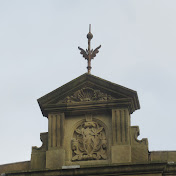
The Roman Catholic Church of St Peter and St Paul, Ribchester.
The church was founded before 1783, the current Grade 2 listed building dates from 1789 though there has been a chantry priest here to celebrate Mass since before the Reformation and the dissolution act came in 1536-41. In the days of persecution there were several centres nearby where Mass was said in secret -Hothersall Hall, Bailey Hall, Showley Hall, Dinckley Hall, Carr Hall, Osbaldeston Hall, and several others a little farther away.
From 1761 a Father William Fisher was at Showley as chaplain and it was through his efforts that the present chapel was built near Stidd {Old English} in 1789.
Rt. Rev. Francis Petre, Bishop of Amoria, Vicar Apostolic of the Northern District 1750 to 1775 resided with the Walmsley family at Showley Hall, a remote house off the Blackburn to Ribchester road. When he died he was buried before the altar at Stidd. The parish register states: 1775, Dec. 27, Francis Peter, Esquire., Sholey, a Romish Bishop.
The Stidd site may have been chosen to be near the shrine of the Catholic Bishop but also to keep in hiding to some extent. A recess in one of the rooms at the priest's house seems to indicate that there was an altar there, and perhaps for safety the Blessed Sacrament was kept there. Father Fisher resigned in 1805 but died at Ribchester in 1813.
The oldest church in the diocese, built before the Second Catholic Relief Act, and passing itself off as the pavilion wing of a small country villa. The church was extended at the (ritual) west end in 1877. The interior is plain, with a gallery at the west end; there are few furnishings of note and the building has suffered from some inappropriate alterations.
In the eighteenth century, Catholic activity was centred on Hothersall Hall, Bailey Hall, Osbaldeston Hall and other Catholic households. Bishop Francis Petre, Vicar Apostolic of the Northern District from 1750-75, lodged with the Walmesley family at Showley Hall, Clayton-le-Dale. The parish registers for Ribchester go back to 1783, and the land for the present church was granted on a 199-year lease by Richard Walmesley to Rev. William Fisher, his chaplain, on 11 April 1788. This was just before the passage of the Second Catholic Relief Act, which legalised the building of public Catholic places of worship. In the words of the parish history, ‘the church was built to correspond in every detail, except depth, to the other side of the Lodge (presbytery) in order to disguise its function as a place of Catholic worship’. According to this history, the church was originally the size of the present sanctuary, and was only extended to its current length in 1877. Perhaps more plausibly, Hartwell suggests that the church was extended by just one bay at this time, when the gabled wall and bellcote would have been added. Either way, the additions were seamless, with the original west door and window reused.
A school was built in Stydd Lane in 1861-2, extended in 1911 and again in 1961-2. It closed in 1984 and the building now serves as the parish centre.
The interior decoration has been at times very rich, but the present appearance seeks to reinforce the building’s simple barn-like character. In c1989 major alterations and refurbishments were carried out at the time of the church’s bicentenary. These included the removal of the render from the internal (ritual) east wall to expose the rubble stone construction and the unblocking of blind windows in the south (ritual east) wall. The pews, which are likely to have been the original ones, were removed, although some survive in the gallery.
Key Aspects of IHS on Graves:
Meaning: It is a symbolic abbreviation for Jesus. In Greek, "iota" (Ι) "eta" (Η) and "sigma" (Σ or S) are used.
Origin: The abbreviation appeared on coins as early as the 7th-8th centuries, and was popularized in the 15th century by St. Bernardine of Sienna.
Interpretation: While often interpreted as Iesus Hominum Salvator, it is sometimes wrongly interpreted as "I Have Suffered" or "In His Service".
Variations: Sometimes it appears as a monogram, or in conjunction with a cross (e.g., in a Celtic Cross ) or within a Cemetery Symbolism context.
Jesuit Connection: The Society of Jesus (Jesuits) adopted the IHS symbol as their emblem in the 17th century, contributing to its prevalence.
This symbol is commonly found in older, particularly Irish and European, graveyards, acting as a powerful symbol of faith for the deceased.
#OldWorldExploring #HiddenHistory #Grade11 #History #VillageHistory #VillageLife #Exploring #13thCentury #OldTown #BlackburnDrifter #HistoricBuildings #HistoricalArchitecture #HeritageSite #SacredHistory #VillageLandmarks #TravelHistory #VictorianArchitecture #VictorianEra #Oldworld #IndustrialRevolution #MunicipalBuilding #HistoricBuilding #ArchitecturePhotography #TimelessArchitecture #StoneChurch #ArchitecturalDetails #HistoricDesign #ArtAndArchitecture #Unitarian #Unitarianchapel
