The History of Money: Did It Really Start With Barter?
Tally Stick
0:00 / 0:00
The History of Money: Did It Really Start With Barter?
15 просмотров · 8 дн. назад
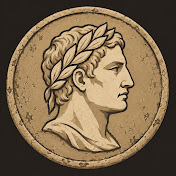
Tally Stick
8 подписчиков
15 просмотров · 8 дн. назад
The history of money, 1834: the British government burned down its own Parliament by accident, feeding old tally sticks into a stove. Those sticks were receipts for money owed, and they are evidence in one of the oldest arguments in economics. Textbooks say money was invented to replace barter. In 1985 an anthropologist wrote that no barter economy had ever been described, and that became a famous fact. In 2025 an economist checked her footnote. This episode tests all three positions against the records: Mesopotamian tablets, the Laws of Hammurabi, English tally sticks, the first coins, and a Second World War prison camp where cigarettes became money.
CHAPTERS
0:00 Parliament burns down
1:18 The argument in brief
2:03 Aristotle's barter story
2:35 Adam Smith and the butcher
5:13 What the clay says
6:15 Hammurabi's world of debt
7:13 The first coins came late
8:06 "Credit and credit alone is money"
8:37 How a tally stick worked
10:08 Back to the fire
10:47 "No barter economy has ever been described"
11:45 The footnote
12:56 What Humphrey studied
14:09 Money in a prison camp
15:36 Credit, bad money and paper money
17:21 Both sides at once
17:39 Money as an IOU
18:32 What the record can't tell us
SOURCES
Adam Smith, The Wealth of Nations (1776), Book I, chapters II and IV (Project Gutenberg).
Aristotle, Politics, Book I, tr. William Ellis (Project Gutenberg).
Herodotus, Histories I.94, tr. G. C. Macaulay (Project Gutenberg).
Carl Menger, "On the Origin of Money", Economic Journal 2 (1892), tr. C. A. Foley.
A. Mitchell Innes, "What is Money?", Banking Law Journal (May 1913).
Laws of Hammurabi, tr. L. W. King (1910), Avalon Project, Yale Law School; Musée du Louvre, Code of Hammurabi (Sb 8), c. 1792–1750 BC.
British Museum, Money Gallery (Room 68), large-print guide: the earliest coins (Lydia, about 650 BC), accounting in Egypt and Mesopotamia, the Tupsikka land tablet (about 2400–2200 BC), tally sticks.
UK Parliament: "The Great Fire of 1834"; "Tally Sticks", Parliamentary Archives HL/PO/RO/1/195.
Charles Dickens, speech on Administrative Reform, Theatre Royal, Drury Lane, 27 June 1855.
Tim Harford, "What tally sticks tell us about how money works", BBC News, 9 July 2017.
Caroline Humphrey, "Barter and Economic Disintegration", Man 20 (1985), quoted from Ganev (2025).
David Graeber, Debt: The First 5,000 Years (2011), quoted from Ganev (2025).
Thomas Crump, The Phenomenon of Money (1981), quoted from Ganev (2025).
Georgy Ganev, "Has the barter theory of the origins of money been rejected?", MPRA Paper No. 124237 (2025), working paper.
R. A. Radford, "The Economic Organisation of a P.O.W. Camp", Economica 12 (1945), 189–201.
Michael McLeay, Amar Radia and Ryland Thomas, "Money in the modern economy: an introduction", Bank of England Quarterly Bulletin 2014 Q1.
WHERE THE RECORD IS CONTESTED
Did money start with barter? Smith and Menger said yes. Innes (1913), Humphrey (1985) and Graeber (2011) said no. Ganev (2025) argues the strict textbook version, with perfectly rational traders and whole markets run by barter, is rightly rejected, but the older, looser story has not been. Nobody has settled it: money began before writing, and nobody has worked out what barter would leave behind in the ground.
Humphrey's page one says no barter economy has "ever" been described; the source she cites (Crump 1981) says examples are "rare".
How widely tallies changed hands as money: Innes claimed "all commerce" ran on them; the British Museum says only that they recorded payments or loans.
ARCHIVES & CREDITS
J. M. W. Turner, The Burning of the Houses of Lords and Commons (two versions, 1834–35; one at the Cleveland Museum of Art), public domain. Ruins of the Houses of Parliament, 1834 print (British Museum 1880,1113.2641), public domain. Tally stick drawing, Encyclopaedia Britannica 11th ed. (1911), public domain. Exchequer tally, 13th century, British Museum, photo by Ealdgyth, CC BY-SA 3.0. The Wealth of Nations title page (1776), public domain. Code of Hammurabi, Louvre, photo by Fred Romero, CC BY 2.0; upper part of the stele, photograph from Milkau (1929), public domain. Cuneiform tablet, loan of silver, Metropolitan Museum of Art, CC0. Electrum coin of Sardis, Bibliothèque nationale de France, public domain. Electrum coins from Ephesus, photo by Zunkir, CC BY-SA 4.0. Eastern Zhou spade money, photo by Gary Todd, CC0. All via Wikimedia Commons. Map outlines: Natural Earth (public domain). The Tupsikka tablet and the Parliament tallies are shown as illustrations. Document scenes reproduce text from the sources above. Original illustrations created for this video. Music generated for this video with ElevenLabs.
Narration and illustrations are AI-assisted. We trace every figure to its source.
This video is history and general information, not financial advice.
#ts5 #history #financialhistory
