After the Mutiny: Destroyed Home of the Sardauna | Nzeogwu & Katsina at Army HQ | January 1966
Adeyinka Makinde
0:00 / 0:00
After the Mutiny: Destroyed Home of the Sardauna | Nzeogwu & Katsina at Army HQ | January 1966
42 044 просмотра · 7 лет назад
Adeyinka Makinde
120 тыс. подписчиков
42 044 просмотра · 7 лет назад
Friday, January 21st 1966.
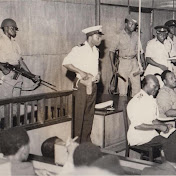
Soundless footage first of the destruction wrecked on the home of Sir Ahmadu Bello, the Sardauna of Sokoto, by mutineers in the Nigerian Army and then of Major Chukwuma Nzeogwu and Major Hassan Katsina at the headquarters of the First Brigade of the Nigerian Army in the northern city of Kaduna.
The Sardauna:
The home of the Sardauna, a descendant of Usman Dan Fodio the founder of the Sokoto Caliphate and one of the most powerful and influential politicians in Nigeria, was attacked by soldiers seeking to overthrow the civilian government which they accused of mismanagement and corruption.
Led by Major Nzeogwu, they fired anti-tank guns into the building which blew off its roof and set it on fire. Nzeogwu would claim in an interview that the Sardauna was found hiding among some women.
He was then shot to death.
Major Nzeogwu:
The 29-year-old major, who announced the coup on radio on January 15th, took control of Kaduna and the Northern Region. But the coup failed elsewhere and so on January 19th, he pledged his loyalty to the head of the army, Major General J.T.U. Aguiyi-Ironsi.
Nzeogwu spoke to foreign pressmen at the headquarters of the army's First Brigade and was filmed surrounded by other soldiers including Major Hassan Katsina.
Nzeogwu would later give himself up and be placed in detention.
The mutiny would have great ramifications for the country. Most of the political and military figures who were murdered during its execution were from the Northern and Western regions, while the coup itself had been orchestrated mainly by ethnic Igbos such as Major Nzeogwu. In the following months would develop a climate of mistrust in the army and fears in the wider population that the coup had been a plot designed to establish the political hegemony of Igbos.
A second mutiny in July, which was orchestrated by Northern soldiers led to mass assassinations of soldiers from the Eastern region, while anti-Igbo pogroms were launched in May (following the promulgation by Ironsi of a decree changing Nigeria from a federation to a unitary state) and in the latter part of September and early October.
The concatenation of violence would culminate in a civil war fought from July 1967 to January 1970 between federal Nigeria and the secessionist state of Biafra which was created out of the Igbo-dominated Eastern Region of Nigeria.
Source of footage: Reuters News.
