96% of Life on Earth Died — This Is How
EarthsStoryTelling
0:00 / 0:00
96% of Life on Earth Died — This Is How
826 просмотров · 9 дней назад
EarthsStoryTelling
31 подписчик
826 просмотров · 9 дней назад
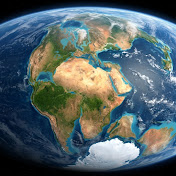
252 million years ago, Earth came closer to sterilising itself than at any other point in the history of complex life.
Around 96% of marine species and 70% of land vertebrate species disappeared. Not 96% of individuals — 96% of kinds. The trilobites, which had survived a quarter of a billion years, vanished completely and never returned.
It wasn't an asteroid. It came from inside the Earth, and it took its time.
⏱️ CHAPTERS 0:00 The worst day in Earth's history 1:01 The world before 2:08 It began in Siberia 3:13 What was buried under Siberia 4:31 Four ways to kill an ocean 5:43 The trilobites are gone 6:35 The land came apart 7:32 How we know 8:46 The silent world 9:54 The animal that inherited a dead world 11:00 Why it lived 12:01 What came next 13:00 The uncomfortable part 14:03 Next time
🔬 THE SCIENCE The end-Permian extinction is dated to around 251.9 million years ago. The leading explanation is the Siberian Traps — the largest continental volcanic event in the geological record.
But the lava alone doesn't explain it. Eruptions began roughly 300,000 years before the extinction, and ecosystems were largely unaffected. Recent work points to a shift in the eruptions: magma began intruding sideways into Siberia's sedimentary basins as sills, heating enormous deposits of coal, salt and organic sediment in the Tunguska Basin and releasing carbon dioxide, methane and sulphur compounds into the atmosphere.
The result was warming, ocean acidification and widespread anoxia — oxygen-starved seas where sulphur bacteria produced hydrogen sulphide.
The evidence is global: a boundary layer where fossils stop, a sharp carbon isotope excursion, datable ash beds, and volcanic nickel isotopes in Arctic sediments.
Afterward, Lystrosaurus — a pig-sized burrowing dicynodont — dominated some Early Triassic fossil assemblages to an extraordinary degree. Why it survived isn't fully settled: burrowing, a large chest cavity, a generalist diet, and possibly luck.
🔔 Subscribe for a new episode every week.
#GreatDying #PermianExtinction #MassExtinction #Paleontology #Lystrosaurus
