Steve Reich - The Desert Music (1984/2001), chamber version
Cmaj7
0:00 / 0:00
Steve Reich - The Desert Music (1984/2001), chamber version
11 499 просмотров · 3 мес. назад
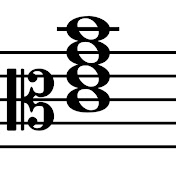
Cmaj7
61,4 тыс. подписчиков
11 499 просмотров · 3 мес. назад
I really enjoy this powerful and intense recording/arrangement of the piece by Alan Pierson. The amplified voices sound so epic and eerie, in a biblically accurate angel sort of way, and the strings play with such vigor. It really suits the mood of the piece.
Reich's Program Note (from https://www.boosey.com/cr/music/Steve...
Following the arrangement of the text, three cycles of harmonies were composed to serve as the basis for the individual movements. I chose to present these cycles as a series of pulsing chords, a similar in rhythm to the pulses in my earlier Music for 18 Musicians, but more chromatic and "darker" in harmony than the earlier piece, to suit the text. The cycle of the 1st and 5th movements cadences, though with some ambiguity, on a D Dorian center. This ambiguity resides in the fact that a prominent A altered dominant chord follows the D, but an F altered dominant proceeds it. The cycle of the 2nd and 4th movements does not clearly cadence on any center, though it too contains a prominent altered A dominant chord. The cycle for the large 3rd movement is the most ambiguous of all since all the chords are altered dominants with their root moving in major and minor 3rds making a cadence impossible. Thus the overall harmonic movement of is from the possibility of a D Dorian center to more and more ambiguity, until in the 3rd movement, where the text would seem to suggest it, there is no clear harmonic center at all. This ambiguity more or less remains until well into the 5th movement when, just before the chorus enters, there is a large orchestral cadence, albeit coming from that F altered dominant. This chord is then used to move from one movement to the other at each change of tempo. The piece ends with the women's voices, violins and mallet instruments pulsing the notes G, C, F, A which are the common tones to both the A altered dominant and the D Dorian. The piece therefore ends with a certain harmonic ambiguity, partially, but not fully, resolved.
As to the meaning of the text and music I hope that it speaks for itself.
00:00 I. Chords pulse gorgeously in and out, shifting between dark and light harmonies
01:27 Brass and synth swells intensify the soundscape
02:41 An energetic ostinato in the strings, gradually overlapping with itself more and more complexly
03:20 Glowing choral clusters develop rhythmically, shifting to a darker sound at 4:18 (5:14)
05:30 An epically luminous D Dorian chord as (5:52) the orchestra gains a vigorous dancelike energy
05:59 A hypnotic soundscape as the pulsing returns, layering with the string ostinato
07:12 II. Biting percussion chords suddenly begin the highly rhythmic movement II (7:49)
08:00 Almost primitive-sounding rhythmic interplay between the flutes and percussion
08:34 Searingly intense woman's voices, before the pulsing returns to break the rhythm apart
09:04 Highly rhythmic vocal articulations blend with the rhythmless pulsations
09:44 Recapitulation with extended, more sinister harmonies (10:47)(11:50) (12:00)
13:03 III. Resounding percussion chords suddenly end II; clockwork percussion rhythms begin
13:22 A hypnotic string melody/ostinato begins, gradually overlapping with itself
14:47 Ominous chords begin to fade in and out
18:20 A somber text begins, harmonized appropriately bleakly
19:50 A sudden increase in energy: a highly rhythmic canon oppressively repeats "it is a principle of music to repeat the theme," harshly harmonized
22:03 The voices coincide on intense chords "as the pace mounts"
22:51 A luminously bright canon on "difficult," interjections of the dark harmonies of before (23:55) Accented, angular canon
24:43 A final intense chorale as the pulsing returns
25:11 (Resonating vibes with the bass drums here sounds so cool), announcing the return of the hypnotic string ostinato
27:56 Blaring sirens (mic'ed violas) create a terrifying atmosphere with the ominous swelling chords (28:58)
29:31 Reprise of the bleak chorale, at a more intense higher pitch
31:09 IV. The mirror to II, strengthened by fuller orchestration and harmonies
32:03 (flute and percussion rhythmic interplay)
33:09 (rhythmic articulations blending with the pulsations)
34:12 V. The energetic string ostinato returns
34:52 Alternating bright and dark chords fade in and out as gorgeous melodic lines appear above and below (37:07)
38:02 Powerful choral chords suddenly stop the movement
39:01 A wild dancelike energy envelopes the orchestra, rapidly changing tonalities
40:15 Burning, intensely climactic chords
40:48 Celestial flutes and violins as the pulsations slowly fade away
43:14 A beautifully wispy end to the piece
Score available from Boosey and Hawkes: https://www.boosey.com/cr/music/Steve...
Composer: Steve Michael Reich (October 3, 1936 –)
Performers: Alarm Will Sound and Ossia conducted by Alan Pierson
Poetry: William Carlos Williams
How I make my videos: https://github.com/CMajSeven/Workflow...
