What Is a Quantum Computer… Really? | Science For Sleep
Physics With William
0:00 / 0:00
What Is a Quantum Computer… Really? | Science For Sleep
3 354 просмотра · 19 часов назад
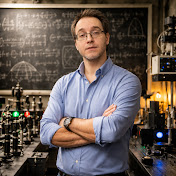
Physics With William
2,88 тыс. подписчиков
3 354 просмотра · 19 часов назад
Welcome to Physics With William — your calm place to unwind, relax, and gently drift into sleep while exploring one of the most fascinating technologies in modern physics.
Tonight, we softly explore quantum computers — machines that do not simply calculate faster, but process information in a fundamentally different way.
Instead of ordinary bits that are either zero or one, quantum computers use qubits, which can exist in superpositions and become entangled with one another. Quantum algorithms carefully control these states so that some possible answers reinforce while others cancel through interference.
This does not mean a quantum computer tries every answer at once and instantly picks the right one. Its power comes from designing interference patterns that make useful outcomes more likely when the system is finally measured.
Quantum computers may one day help with certain problems in chemistry, materials science, cryptography, and simulation — but they are not replacements for ordinary computers, and building large, reliable machines remains extremely difficult.
Take a slow breath, imagine information quietly flowing through superposition and entanglement, and let Physics With William carry you into calm — where even computation becomes a gentle dance of quantum possibilities.
Sources:
Wilson et al., “Observation of the Dynamical Casimir Effect in a Superconducting Circuit” — https://www.nature.com/articles/natur...
Gerald T. Moore, “Quantum Theory of the Electromagnetic Field in a Variable-Length One-Dimensional Cavity” — https://doi.org/10.1063/1.1665432
V. V. Dodonov, “Current Status of the Dynamical Casimir Effect” —https://arxiv.org/abs/1004.3301
Nation et al., “Stimulating Uncertainty: Amplifying the Quantum Vacuum with Superconducting Circuits” — https://doi.org/10.1103/RevModPhys.84.1
Dalvit, Maia Neto and Mazzitelli, “Fluctuations, Dissipation and the Dynamical Casimir Effect” — https://arxiv.org/abs/1006.4790
