Francesco Veracini (1690-1768) - Ouverture a piu strumenti
Pau NG
0:00 / 0:00
Francesco Veracini (1690-1768) - Ouverture a piu strumenti
4 352 просмотра · 1 г. назад
Pau NG
17,6 тыс. подписчиков
4 352 просмотра · 1 г. назад
★ Follow music ► / reciclassicat
Composer: Francesco Veracini (1690-1768)
Work: Ouverture (I, B-Dur) a piu strumenti
Performers: Musica Antiqua Köln; Reinhard Goеbеl (conductor)
Painting: Gaspar van Wittel (1652-1736) - Florence, a view of the city from the right bank of the River Arno looking towards the Ponte alla Carraia
HD image: https://flic.kr/p/2rBjjYP
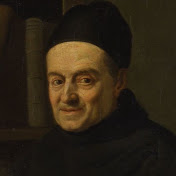
Painting: Franz Ferdinand Richter (1693-c.1743) - Francesco Veracini (1739)
HD image: https://flic.kr/p/2rCqRLU
Further info: https://www.discogs.com/sell/release/...
Listen free: https://open.spotify.com/album/3EDaZQ...
---
Francesco Maria Veracini
(Florence, 1 February 1690 - Florence, 31 October 1768)
Italian composer and violinist. He was born into a family of musicians and artists. His grandfather was one of the first violinists of Florence; his uncle Antonio Veracini (1659-1733) was that and a fine composer as well. He studied violin with his uncle, with whom he appeared in concerts in Florence, and also received instruction from Giovanni Maria Casini and Francesco Feroci, and from Giuseppe Antonio Bernabei in Germany (1715). In 1711 he went to Venice, where he appeared as a soloist at the Christmas masses at San Marco; in 1714 he gave a series of benefit concerts in London, and in 1716 entered the private service of the Elector of Saxony; in 1717 he went to Dresden and entered the court service. In 1723 he returned to Florence, where he was active as a performer and composer of sacred works; he also gave private concerts. In 1733 he returned to London, where he played for the Opera of the Nobility, a rival to Handel's opera company; he also composed operas during his London years. In 1745 he returned to Italy, where from 1755 until his death he was maestro di cappella for the Vallambrosian fathers at the church of S. Pancrazio in Florence; he also held that position for the Teatini fathers at the church of S. Michele agl'Antinori there (from 1758). He acquired a reputation as an eccentric, and some considered him mad. Nonetheless he was esteemed as a violinist and composer. Charles Burney remarked that ‘by travelling all over Europe he formed a style of playing peculiar to himself’.
