All creatures of our God and King. #organ #organist #music #christianencouragement
scott marroon
0:00 / 0:00
All creatures of our God and King. #organ #organist #music #christianencouragement
91 просмотр · 2 нед. назад
scott marroon
326 подписчиков
91 просмотр · 2 нед. назад
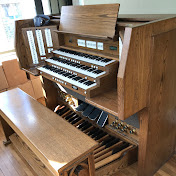
LEG WORKOUT today!! It started with yoga this morning then on to the organ bench! Pedalling is my favourite part of playing the organ so be sure to watch my feet working over the pedal board. Be sure to watch to the end of this video as I change the stop selections on the last verse to bring in some Reed stops. Listen to that cathedral echo once I release my hands from the keys!!!
Phoenix Organs are a very impressive organ!!
Please be sure to like, comment, follow and share. It helps my videos reach more people who may be interested in music.
I also decided to re-record this same song and play it in its original key signature of 2 sharps (D Major).
All creatures of our God and King:
Written in D major (2 sharps). I played the same tune written in E-flat major (3 flats) originally and transposed it to the tone of D Major.
"All Creatures of Our God and King" is an 800-year-old Christian hymn of praise with lyrics adapted from a 13th-century poem by St. Francis of Assisi. [1, 2, 3]
The Origins: St. Francis of Assisi (1225)
St. Francis wrote the original text, known as the Canticle of the Sun (Canticum Solis) or Song of All Creatures, around 1225.
Francis was old, sick, and nearly blind when he wrote it.
He wanted to express peace and a deep sense of unity with nature.
The poem treats elements of nature—like wind, water, fire, and the sun—as brothers and sisters.
It draws heavy inspiration from Psalm 148. [1, 2, 3, 4, 5, 6, 7, 8]
The English Paraphrase: William Henry Draper (c. 1910)
Around 1910, British clergyman William Henry Draper adapted Francis's Italian text into English.
He wrote the paraphrase for a children's Whitsuntide (Pentecost) festival at his church in Leeds, England.
Draper's version officially appeared in print in the Public School Hymn Book in 1919. [1, 2, 3, 4, 5]
The Melody: Lasst uns erfreuen (1623)
Draper's English text was paired with a traditional German Easter tune called Lasst uns erfreuen.
This melody first appeared in a 1623 Cologne hymnal titled Geistliche Kirchengesänge.
Composer Ralph Vaughan Williams arranged this majestic tune for the 1906 English Hymnal, setting the standard for how the modern congregation sings it today.
#organ #organist #church #music #inspirational #ChristianEncouragement
