Sergei Slonimsky: Requiem [Score-Video]
Alexander Gonet - Composer
0:00 / 0:00
Sergei Slonimsky: Requiem [Score-Video]
236 просмотров · 3 недели назад
Alexander Gonet - Composer
47 подписчиков
236 просмотров · 3 недели назад
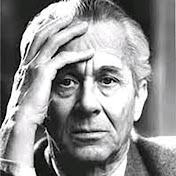
Sergei Mikhailovich Slonimsky (1932-2020) was a russian soviet composer and the nephew of composer Nicolas Slonimsky. He studied at the Musical College in Moscow from 1943-50. From 1950 Slonimsky stayed at the Leningrad Conservatory. He studied composition under Boris Arapov, Vissarion Shebalin and Orest Yevlakhov. Slonimsky was a professor at the St. Petersburg Conservatory.
0:00 Intro
0:11 I. Lacrimosa
5:07 II. Dies Irae
10:06 III. Requiem Aeternam
12:07 IV. Lux Aeterna
14:35 V. Tuba Mirum
17:01 VI. Agnus Dei
21:15 VII. Rex Tremendae Majestatis
23:26 VIII. Domine Jesu
27:02 IX. Hostias
29:26 X. Sanctus
30:56 XI. Benedictus
33:16 XII. Libera Me
37:27 XIII. Kyrie Eleison
41:27 XIV. Lacrimosa
Slonimsky’s Requiem was composed in 2003 and premiered in 2004. According to Slonimsky himself, he was inspired to write the Requiem by memories of the brutal 20th century, and a realization of the need for mercy and kindness. “While working on it, I thought about the innocently slain, whose numbers on earth are increasing year by year,
I thought about human sinfulness and the atonement of sins, about repentance as a measure of our spirituality,” the composer said at one of his creative meetings.
For him, this genre embodies the idea of repentance and a plea for the forgiveness of sins, and is not intended for use in a church service. The composer emphasized the special significance of this work in his creative biography, saying: “A requiem is written once in a lifetime. I will never write another one.”
The Requiem opens not with the traditional prayer for eternal rest (Requiem aeternam), but with music of tears and sorrow (Lacrimosa), for, as has already been noted, the central emotion of the Requiem is mourning for the innocent victims, of whom there were so many in the 20th century. It is worth noting that the Lacrimosa
not only opens but also concludes the cycle, thereby framing the composition with a lament for the innocent victims - a feature that is also highly unusual for the traditional structure of a requiem. All the dramatic and dynamic sections alternate with slower ones, whose music is characterized by a song-like quality. Thus, images of sorrow and tears are contrasted with images of wrath and scenes from Hell. The stylistic range of the Requiem is quite broad. It includes Russian folk songs, echoes of Gregorian and liturgical chants, medieval choral polyphony, Baroque rhetoric, bell-like sounds, and elements of the modern musical language of the Requiem’s structure.
St. Petersburg State Capella Choir and Symphony Orchestra
Conductor: Vladislav Chernushenko
Soprano: Larisa Radchenko
Mezzo-Soprano: Daria Leibova
Tenor: Oleg Trofimov
Bass: Pyotr Migunov
I do not own the rights to the music or score, I simply share them for educational purposes
Score obtained by: @Kotov617
