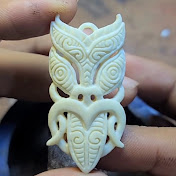
Maori carvings include tiki, koru, manaia...#art #carving #necklace #woodworking #maori
PP Carving Art
0:00 / 0:00
Maori carvings include tiki, koru, manaia...#art #carving #necklace #woodworking #maori
486 просмотров · 2 мес. назад
PP Carving Art
2,19 тыс. подписчиков
486 просмотров · 2 мес. назад
Hi, everyone.
If you like this video please subscribe to the channel and press the LIKE button.
The image you shared showcases beautiful carvings that represent traditional *Māori art* and symbolism from Aotearoa (New Zealand). The text labels in the image are actually a bit mixed up compared to what the carvings represent, so let's break down exactly what these designs are, their names, and their profound cultural meanings.
1. The Hei-Tiki (Tiki)
*What it is:* The second carving from the left (the wooden, humanoid figure) is a traditional *tiki* (specifically, hei-tiki when worn as a pendant).
*Meaning:* The tiki represents the first human created in Māori mythology, or a powerful ancestor. It is a symbol of **good luck, fertility, and protection**. Tiki pendants are often regarded as sacred heirlooms (*taonga*) passed down through generations, absorbing the prestigious spiritual power (*mana*) of those who wore them.
2. The Koru (Spiral)
*What it is:* The first, third, and fifth carvings all feature variants of the *koru* (the spiral shape).
The third carving (reddish wood) is a classic teardrop-shaped koru.
The fifth carving on the far right (white bone) is a *Hei Matau* (fish hook) integrated with a koru spiral.
*Meaning:* The koru is modeled after an unfurling silver fern frond. It symbolizes **new life, growth, strength, and peace**. Its circular shape conveys the idea of perpetual movement and a return to the point of origin, representing the relationship between ancestors and the living.
3. The Hei Matau (Fish Hook)
*What it is:* The carving on the far right (white bone).
*Meaning:* Representing a traditional Māori fish hook, the hei matau symbolizes **prosperity, abundance, and safe travel over water**. According to legend, the North Island of New Zealand was once a giant fish pulled from the ocean by the demigod Maui using a sacred fish hook.
4. Traditional Patu / Heru or Hoe (Paddles/Weapons)
*What it is:* The fourth carving (rectangular wood with geometric patterns).
*Meaning:* This shape resembles a stylized hoe (canoe paddle) or a traditional hand club (*patu*), adorned with complex *tāniko* or *whakairo* (carving) geometric patterns. These patterns often tell stories of a tribe's lineage, the ocean, or the physical landscape, symbolizing **authority, determination, and connection to the land**.
Quick Summary of the Materials
Traditional Māori carvers use specific natural elements, each carrying its own spiritual connection:
*Bone (Pāua/Pakohe/Iwi):* Represents a connection to the land and creatures of the earth and sea. Over time, bone carvings absorb the natural oils of the wearer, turning a soft, warm honey gold.
*Wood (Rākau):* Often carved from native trees like Totara or Kauri, connecting the wearer directly to Tāne Mahuta (the god of the forest).
*Greenstone (Pounamu):* Though not pictured here, this highly prized New Zealand jade is the ultimate material for these designs, symbolizing status, strength, and deep cultural heritage.
Thanks for love and support, you are very important to me. Thank you for watching this video.
Thanks all
