Every Exoplanet Size Comparison | 3D 2026
Scale Comparisons
0:00 / 0:00
Every Exoplanet Size Comparison | 3D 2026
7 538 просмотров · 3 недели назад
Scale Comparisons
93 подписчика
7 538 просмотров · 3 недели назад
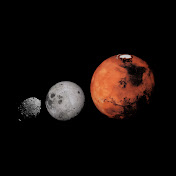
56 exoplanets, 2 stars and 3 dwarf planets in one continuous size comparison, from a world smaller than our Moon to a planet bigger than some stars. Every stop shows the Earth at the same scale, so you always know exactly how big things really are.
Over 6,000 exoplanets have been confirmed so far. These are the ones worth stopping for: the record holders, the firsts, and the strangest worlds we know of.
Reading the cards:
Earth radii: size compared to Earth. 0.31 means 31% of Earth's radius, about the size of our Moon. The small Earth on screen is always at the same scale.
Earth masses: weight compared to Earth. Size and weight don't always match: gas planets are big but light, iron planets are small but heavy.
K: temperature in Kelvin (subtract 273 for Celsius). 718 K is about 445°C, hot enough to melt lead. Around 280-290 K is Earth-like. These are equilibrium estimates from the star's heat, not direct measurements.
Year: how long one trip around its star takes, in Earth days. Most known exoplanets hug their stars, so their years are absurdly short.
Red dwarf / orange dwarf / yellow sun-like / white star: the type of star it orbits, from coolest to hottest.
Light years: distance from us. One light year is about 9.5 trillion km.
What the names mean:
Exoplanets are named after the telescope or survey that found them, plus a letter. The letter is the order of discovery in that system: "b" is the first planet found around that star, "c" the second, and so on ("a" is the star itself).
Kepler / K2 / EPIC: found by NASA's Kepler space telescope
TOI: TESS Object of Interest, from NASA's TESS telescope
WASP: Wide Angle Search for Planets, a UK-led survey
HAT-P, HATS, TrES, KELT, CoRoT: other planet-hunting surveys
HD + number: star catalogued in the Henry Draper catalogue (1920s)
GJ + number: star in the Gliese-Jahreiss catalogue of nearby stars
LTT, LHS: catalogues of fast-moving nearby stars
51 Peg, 55 Cnc: star number + constellation (Pegasus, Cancer)
TRAPPIST-1: a tiny red star with 7 known planets
PSR: a pulsar, the spinning corpse of an exploded star
WD: a white dwarf, the dead core of a Sun-like star
A few planets also carry official IAU names, shown on their cards: Draugr, Janssen, Dimidium.
Chapters
0:00 Dwarf Planets
0:21 The Smallest Exoplanets
1:25 The Closest One
1:50 A Dead Star
2:29 Lava Worlds and Super-Earths
3:25 A Stripped Core
4:10 The Planet With Two Suns
4:54 A Star Smaller Than Planets
5:19 The Darkest Planet
5:51 The Monsters
6:22 Bigger Than Some Stars
Data: radii, masses, temperatures and orbits from the NASA Exoplanet Archive (pscomppars table). Surfaces are illustrations built from each planet's measured temperature and density; no telescope can photograph an exoplanet's surface yet. Pluto is the real New Horizons map (NASA/JHUAPL/SwRI); the unmapped southern region is reconstructed. Ceres is the real Dawn mission map.
Image credits: Earth, Moon and planet reference textures and the Makemake illustration from Solar System Scope (CC BY 4.0, solarsystemscope.com/textures). Pluto map: NASA/JHUAPL/SwRI (public domain). Ceres map: NASA/JPL-Caltech/UCLA/MPS/DLR/IDA.
