Kyshtym: The Nuclear Zone Older Than Chernobyl — 69 Years Without People
The World After US
0:00 / 0:00
Kyshtym: The Nuclear Zone Older Than Chernobyl — 69 Years Without People
38 просмотров · 5 дн. назад
The World After US
2 подписчика
38 просмотров · 5 дн. назад
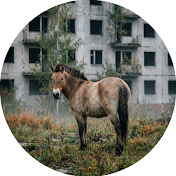
In 1957, a waste tank exploded at the Soviet Mayak plant in the Urals and laid a radioactive trace across the land. The worst of it was fenced off and left to nature — for 69 years. Here's what actually lives there now, and what scientists measured.
This is the East Urals reserve on the Kyshtym fallout trace: the oldest radioactive reserve on Earth, 29 years older than Chernobyl's zone. We follow the forest that lost every pine and turned to birch, the young pines that only came back in 2020, and the field mice whose bones revealed that almost none of them are natives. Plus the numbers most films skip: the dose you'd get standing there today, set against natural background.
0:00 — The forest that took the dose
1:22 — What this film will show
2:44 — The town that was not on the map
4:09 — Sunday, 29 September 1957
5:33 — The cloud and the trace
7:13 — The evacuated villages
8:36 — Thirty years of silence
10:13 — A reserve made for measurement
11:43 — What lives there now
13:20 — What nobody has counted
14:39 — The first winter's dose
16:05 — Why the pines died and the birches lived
17:55 — How the forest recovered
19:47 — The pines come back, crooked
21:28 — The field mouse
22:54 — How much a mouse absorbs
24:33 — Bigger, more numerous, more fertile
25:42 — The damage inside the cells
27:27 — A diary written in bone
28:57 — One mouse in eighty
30:17 — Why the mice never adapted
31:57 — The animal that could not leave
33:52 — What has already decayed
35:05 — Standing in the reserve today
36:46 — Why the danger is in the food
38:35 — The people of 1957
40:24 — Plants with a memory
42:04 — The lakes
43:44 — Bats, deer and fire
45:33 — Kyshtym and Chernobyl
47:20 — A reserve only on paper
48:54 — What sixty-nine years teach
50:53 — The experiment goes on
Key sources: Pozolotina et al. (Russian Journal of Ecology 2021/22; Environmental Monitoring and Assessment 2023); Shishkina et al. (Journal of Environmental Radioactivity 2021); Grigorkina & Olenev (Radioprotection 2009); Fesenko (Journal of Radiological Protection 2019); Akleyev et al. (Journal of Radiological Protection 2017); Tarasov (thesis, 2000); UNSCEAR.
Some scenes in this film are reconstructions created with AI tools; they illustrate the narration and are not archival footage of the reserve.
Subscribe to The World After Us for more places humanity left behind — and what honestly lives there now.
If most of the animals in a place are newcomers, refilled every few years from outside — has nature really come back? Tell us in the comments.
#Kyshtym #Chernobyl #NuclearDisaster #Rewilding #AbandonedPlaces
