Why We Are Still Obsessed With the Parthenon
What the City Forgot
0:00 / 0:00
Why We Are Still Obsessed With the Parthenon
19 просмотров · 9 дн. назад
What the City Forgot
3 подписчика
19 просмотров · 9 дн. назад
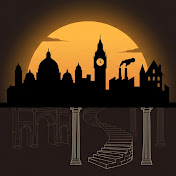
Look closely at paintings of the Parthenon from the 1830s and you will see something that is not there today: a small mosque with a dome, standing between the broken columns. It was not a fantasy. Travellers drew it for generations, and it was not even the first mosque in the Parthenon.
The temple of Athena was built on the Acropolis between 447 and 432 BC. Sometime between the late fifth and the sixth century (around 500) it became a church of the Virgin Mary, and for roughly a thousand years it stayed a Christian church, a Catholic cathedral under Western rulers after 1204. After the Ottomans took the Acropolis in 1458 it became a mosque with a minaret; no document records the date, and sources place it between 1458 and about 1470. On the evening of 26 September 1687, a Venetian shell hit the gunpowder stored inside, and the explosion turned the building into a ruin. In the early 1700s a smaller mosque with a single dome was built inside the shell.
The Acropolis around it was a small fortress town, with gardens and the families of the garrison. Between 1801 and 1812 Lord Elgin's agents removed roughly half of the Parthenon's surviving sculpture: the British Museum says this was done with the permission of the authorities of the time, Greece says it was illegal. In 1834 the new Kingdom of Greece began a programme to remove the later, post-classical remains from the rock. The little mosque was taken down within about a decade (sources disagree on the year), the Frankish Tower in 1875. The new Acropolis Museum opened in 2009, the restoration of the west pediment was completed in June 2026, and as of 6 October 2026 the Greek prime minister says talks with the British Museum about the sculptures in London "have not progressed".
In this episode:
Why the Parthenon was a church for about a thousand years
1458: the Ottomans, the mosque and the minaret
26 September 1687: the shell, the gunpowder and the explosion
The little mosque in the ruins and the fortress town around it
1834: the plan to make the Acropolis classical again, and who decided what stayed
Chapters:
0:00 A mosque inside the Parthenon
2:12 A temple for Athena
4:09 A thousand years as a church
7:05 1458: the Ottomans reach the Acropolis
9:47 26 September 1687
13:22 The little mosque in the ruins
15:15 Lord Elgin
16:16 War on the Acropolis
19:13 1834: clearing the Acropolis
23:18 Iron, titanium and a new museum
25:01 What the hill doesn't tell you
25:38 What I think
Based on sources:
Acropolis Restoration Service (YSMA), The Parthenon: https://www.ysma.gr/en/monuments/part...
YSMA, History of older interventions: https://www.ysma.gr/en/restoration/hi...
Elizabeth Key Fowden, "The Parthenon, Pericles and King Solomon" (2018): https://doi.org/10.1017/byz.2018.8
William St Clair, Who Saved the Parthenon? (2022, open access): https://archive.org/details/oapen-20....
Yannis Hamilakis, "Decolonizing Greek archaeology" (2008): https://doi.org/10.12681/benaki.18044
Cyril Mango, "The Conversion of the Parthenon into a Church: The Tübingen Theosophy" (1995): https://doi.org/10.12681/dchae.1156
Anthony Kaldellis, "A Heretical (Orthodox) History of the Parthenon" (2007 lecture): https://prod.lsa.umich.edu/content/da...
Kornilia Chatziaslani, "Morosini in Athens", Archaeology of the City of Athens (EIE): https://archaeologia.eie.gr/archaeolo...
James Beresford, "Alchemy on the Acropolis" (2016): https://doi.org/10.1017/S0018246X1500...
More sources are in the pinned comment.
AI disclosure: scenes of the temple being built, the church and mosque interiors, the 1687 explosion, the little mosque and the fortress town, the dismantling of the mosque and the 1920s restoration are AI-generated reconstructions (about 4% of the film). People in them are generic figures, not portraits.
What the City Forgot: the history the guidebooks leave out.
#Parthenon #Athens #Acropolis #HistoryDocumentary
