Who Really Pays in a No Money Down Deal?
Letters of Intent - For Dealmakers and Risk takers
0:00 / 0:00
Who Really Pays in a No Money Down Deal?
14 просмотров · 6 дн. назад
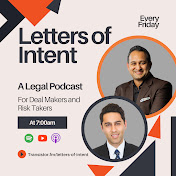
Letters of Intent - For Dealmakers and Risk takers
54 подписчика
14 просмотров · 6 дн. назад
In this episode breakdown, Pankaj Raval and Sahil Chaudry follow the money behind the no money down business acquisition. Working from the SBA's newly revised lending rulebook, SOP 50 10 8.1, they map where acquisition money actually comes from and what each funder takes in return.
Through this practical analysis, Pankaj and Sahil extract critical rules on SBA down payments, seller financing, and leveraged deal structures, that apply directly to founders and leaders of growing private enterprises buying, selling, or financing a business.
This podcast is for informational purposes only and does not constitute legal advice.
Takeaways
• The Return of the Equity Floor: A first-time buyer using an SBA 7(a) loan, the SBA's main program for financing business purchases, must bring an equity injection (the buyer's own stake) of at least 10 percent of total project costs, meaning price, closing costs, and any working capital in the loan. Under 8.1, that floor can't be reduced or waived for an initial acquisition. Seller notes and small passive investors now share one bucket capped at half of it.
• Whose Money, and What They Get: Every no money down deal is funded by someone: the seller through a note, the seller through stock, the business through its own assets or revenue, or a government-backed lender. Each source receives an enforceable right in return, such as a promise to pay, a piece of the company, or a lien (a lender's legal claim on assets). In most of these structures, the seller carries the most risk.
• The Seller's Tax Trap: Under the installment method, a financing seller generally reports gain as payments arrive, but depreciation recapture, the slice of gain tied to past depreciation deductions, is taxed in the year of sale. Paying a seller in stock is a taxable exchange unless it fits a non-recognition rule such as Section 351, which requires contributors to own at least 80 percent of the corporation immediately after.
• When the Business Pays for Its Own Sale: Borrowing against the target's own assets can expose the seller, the lender, and potentially the new owners to a fraudulent transfer claim if the company is left undercapitalized, with no bad intent required. Merchant cash advances can be treated as loans, and New York courts have voided agreements whose effective rate ran past the 25 percent criminal usury cap.
Soundbites
• "Because somebody always puts money down. The only question is who and what they get for it."
• "...So stop asking, can I do this with no money down? Ask whose money is it and what do they get for it?"
• "So seller financing isn't a trick. It's a loan from one person who knows the business best. Document it like a loan, protect it like a loan, and it's one of the most honest tools in deal making."
• "No money down is a financing structure, not a strategy. Price the strings before you pull them."
Keywords
No Money Down, Business Acquisition, SBA 7(a) Loan, SOP 50 10 8.1, Equity Injection, Seller Financing, Seller Note, Fraudulent Transfer, Merchant Cash Advance, Leveraged Buyout
🔗 Learn More
Website: carbonlg.com (https://carbonlg.com/)
Connect with Pankaj: / pankaj-raval
Connect with Sahil: / sahil-chaudry-6047305
Carbon Law Group's links: https://linktr.ee/carbonlawgroup
Click Here To Schedule A Call With Us (https://app.acuityscheduling.com/sche...)
