Every Appalachian Granny Grew These 19 Vegetables in the Great Depression (Eleven Are Gone)
Burl Sizemore Garden
0:00 / 0:00
Every Appalachian Granny Grew These 19 Vegetables in the Great Depression (Eleven Are Gone)
2 111 просмотров · 9 дней назад
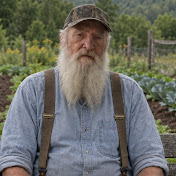
Burl Sizemore Garden
906 подписчиков
2 111 просмотров · 9 дней назад
Go out to your garden this evening and count what is growing in it. Not the plants, the kinds. Most people I ask say four.
My grandmother grew nineteen. Eight of them you can still buy seed for. Eleven of them are effectively gone, and I have been looking for one of them for eleven years.
Here is the part that took me most of my life to understand. The problem was never summer. Anybody can eat in July. For eight weeks this country is too full of food to give away, and none of that ever proved anything.
March proved it.
The end of March in these mountains, the cellar is close to empty. The potatoes that are left have sprouts on them as long as your hand. The kraut crock has a skim on it. The last of the dried beans have weevils. And nothing is up. That is the six weeks want, and it killed people, and it is in the records.
Now think about what those nineteen things in the ground were actually doing. Turnips went in the ground in August because they came out in November when the summer garden was dead. Cabbage got a second setting in July because those heads made kraut that was still good in January. The Candy Roaster sat on a board in a cold room because it was still food in March. Hamburg parsley stayed in the ground all winter because you could dig it when there was nothing else to dig. The winter radish sat in damp sand because it did not go soft. The mangel pit got opened in February because by then you did not care what it tasted like.
That garden was not nineteen vegetables. It was a machine with nineteen parts, and every part covered a stretch of weeks that the part before it could not reach.
In this one I walk through all nineteen. The greasy bean, whose pod has no fuzz on it at all so it looks wet and shiny. The Turkey Craw, which has a story on it that everybody here tells the same way. The cushaw, the crooknecked squash that keeps when nothing else will. October beans. Salsify, which they called the oyster plant. The mangel, a beet the size of your two fists together. Hamburg parsley, grown for the root instead of the leaf. Jerusalem artichokes, whose name is wrong twice. The groundnut, a wild vine with a string of tubers on it like beads. The black winter radish with skin like a tire. The field pea that feeds the dirt while it feeds you. And the everlasting onion, which you plant once and which is still green under the snow in January.
And I go through the four ways they held it: the hole dug into the bank, walled with creek rock laid dry. The pit of roots under straw and dirt with a little chimney to breathe. The drying, on strings behind the stove. The salt and the sour, in a crock with a rock on top of a plate. Four ways of stopping time, and not one of them used a machine or cost a cent.
I want to say something about the word forgotten, because it is in every title about this and I am not sure it is the right word. Forgotten sounds like an accident. Nothing about this was an accident. A woman who gets a job in town in nineteen fifty five does not have four hours in the evening to string beans on a thread. That is not laziness, that is a job. A man who can buy a can of beans for eleven cents does not need to keep a variety alive through a bad summer. That is not carelessness, that is arithmetic. Multiply that by fifty years and every family in the country, and you get exactly what we have, and no one of those decisions was wrong.
That is what makes it hard. If somebody had taken it we could be angry. Nobody took it. We put it down, for reasons that were good at the time.
You can still get most of these if you look, from people who save seed, from a seed swap, from an old man at the end of a road who has been growing the same bean since before you were born. That is how a thing like this stays alive, and it is simpler than people think.
I am Burl Sizemore. Thank you for sitting with me.
